Latest guides.
Recent additions and updates from the BuyRetaUK Knowledge Hub.
Editor's picks.
A laboratory overview of retatrutide (LY3437943) — a triple agonist research peptide acting on the GLP-1, GIP and glucagon receptors.
6 min read →Product ComparisonsSide-by-side comparison of retatrutide and tirzepatide across receptor profile, research context and analytical considerations.
5 min read →6 guides
Background on retatrutide in the academic literature — receptor pharmacology, study context and analytical handling.
8 min read →Product ComparisonsHow retatrutide and semaglutide differ in receptor activity, compound class and laboratory research framing.
5 min read →Certificates of AnalysisHow to read a peptide certificate of analysis — identity, purity, mass and endotoxin sections explained.
7 min read →Purity & Laboratory TestingWhat high-performance liquid chromatography measures, why ≥99% purity matters, and how to interpret HPLC traces on a COA.
6 min read →Purity & Laboratory TestingThe quality standards BuyRetaUK applies to every batch — sourcing, analytical testing, storage and traceability.
5 min read →Storage & HandlingHow to store lyophilised research peptides and reconstitute them correctly for laboratory use.
4 min read →Related products.
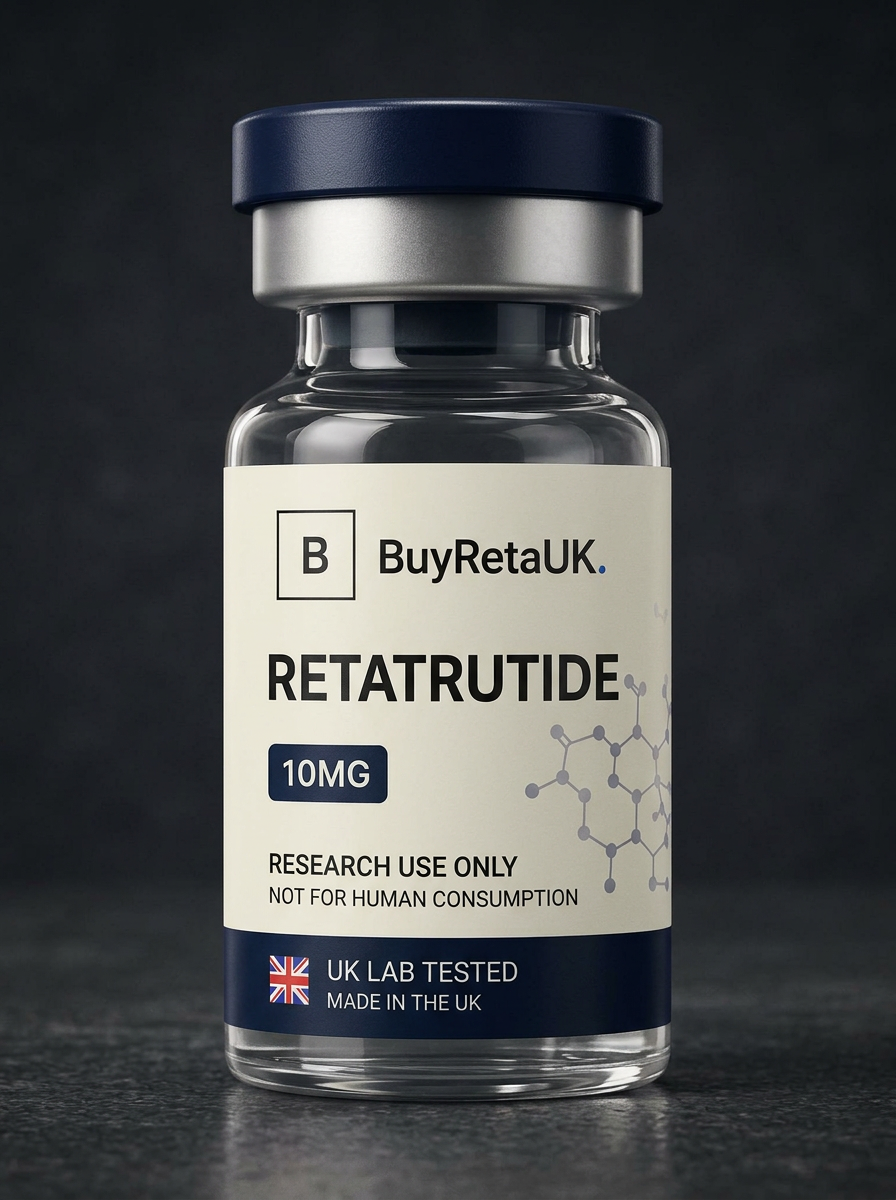
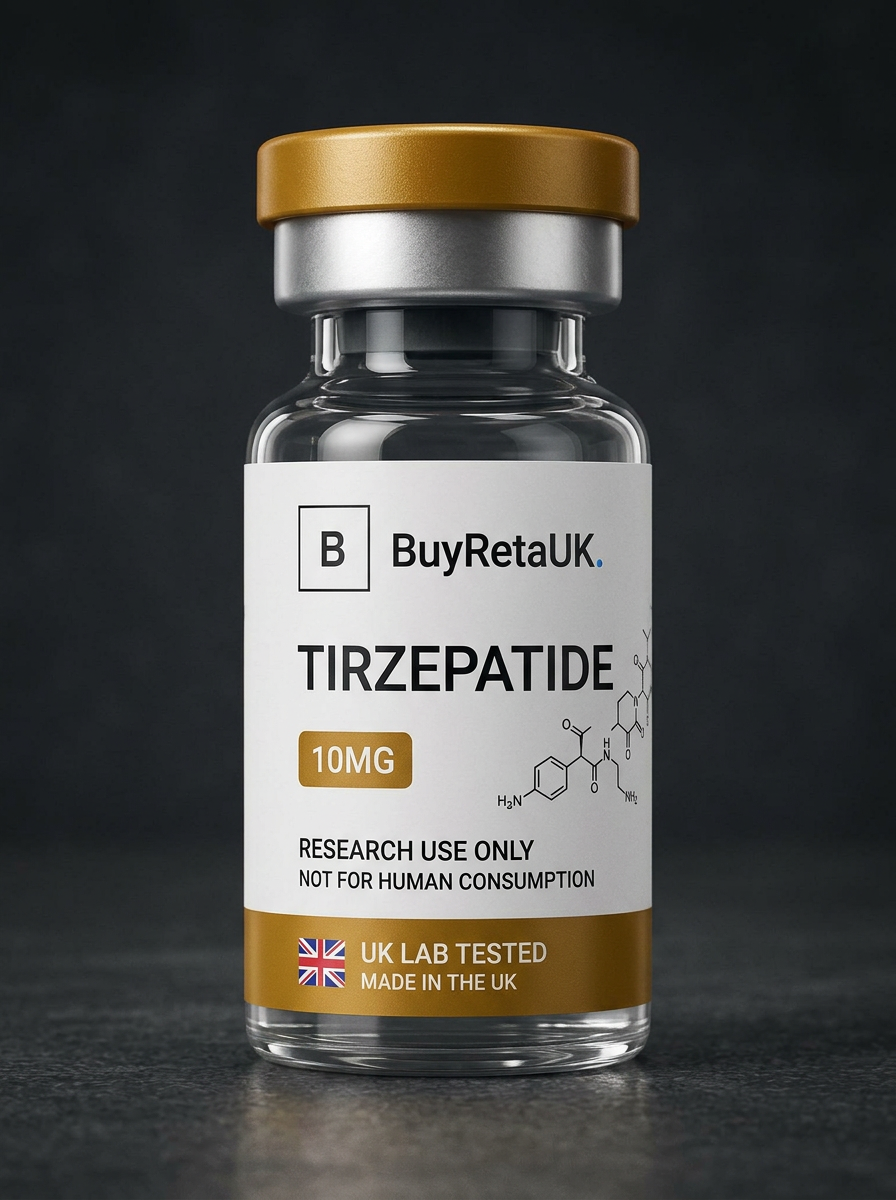


Frequently asked questions.
Is retatrutide approved for human use?
No. Retatrutide is supplied strictly for laboratory research and is not approved for human or veterinary administration.
Read: What is Retatrutide? →What receptors does retatrutide act on?
In published research it has been characterised as a triple agonist acting on the GLP-1, GIP and glucagon receptors.
Read: What is Retatrutide? →How should retatrutide be stored?
Lyophilised vials are stored at 2–8°C, protected from light. Once reconstituted with bacteriostatic water, store refrigerated and use within 30 days.
Read: What is Retatrutide? →Why is retatrutide of interest to researchers?
Its simultaneous activity at three incretin-related receptors makes it a useful tool compound for probing combined signalling pathways in metabolic research.
Read: Retatrutide Research Overview →