In short.
Tirzepatide (LY3298176) is a synthetic long-acting peptide characterised in the peer-reviewed literature as a dual agonist of the GIP and GLP-1 receptors. BuyRetaUK supplies it as a lyophilised powder at ≥99% HPLC purity with a batch-specific Certificate of Analysis for in-vitro laboratory research only — not for human or veterinary use.
At a glance.
What is tirzepatide?
Tirzepatide (developmental code LY3298176) is a long-acting synthetic peptide developed as a research tool for probing simultaneous signalling through two incretin receptors — the glucose-dependent insulinotropic polypeptide (GIP) receptor and the glucagon-like peptide-1 (GLP-1) receptor. It is described in the academic literature as the first characterised dual GIP/GLP-1 receptor agonist to reach large-scale clinical evaluation, and has become a reference compound for laboratory groups studying combined incretin biology, insulin secretion and body-weight regulation.
BuyRetaUK supplies tirzepatide as a sterile lyophilised powder at ≥99% HPLC purity, with a batch-specific Certificate of Analysis, packed for research handling in temperature-controlled UK storage. It is strictly for in-vitro laboratory use and is not approved by BuyRetaUK for human or veterinary administration.
Discovery and development.
Tirzepatide was disclosed by Eli Lilly and Company as LY3298176 and characterised across a body of peer-reviewed pharmacology work from 2018 onward. The peptide was engineered by grafting GIP receptor activity onto a GLP-1 backbone, producing a single molecule with balanced dual agonism and a half-life suited to weekly dosing regimens in the studies that reference it.
The compound is now supported by the Eli Lilly SURPASS clinical trial programme (type-2 diabetes research) and the SURMOUNT programme (body-weight research). For laboratory buyers, tirzepatide's status as the archetypal dual incretin agonist makes it the standard comparator when characterising newer molecules such as the triple agonist retatrutide.
LY3298176 explained.
LY3298176 is the Eli Lilly internal development code for tirzepatide. The two names refer to the same 39-amino-acid synthetic peptide bearing a C20 fatty diacid moiety, which extends plasma half-life via albumin binding in the studies that report its pharmacokinetics. Laboratory suppliers frequently list the compound under both names, and analytical certificates typically reference LY3298176 in the identity block alongside the tirzepatide INN.
When cross-referencing publications, LY3298176 is the term most likely to appear in preclinical and mechanism-of-action papers, while tirzepatide is more common in clinical and metabolic literature.
Dual agonist overview.
A dual agonist is a single peptide that simultaneously activates two receptors. For tirzepatide, those receptors are the GIP receptor and the GLP-1 receptor — the two incretin axes responsible for the majority of nutrient-driven insulin secretion. This contrasts with single agonists (such as semaglutide, GLP-1 only) and triple agonists (such as retatrutide, which adds the glucagon receptor).
In receptor pharmacology assays tirzepatide is characterised as a balanced dual agonist with a bias toward the GIP receptor relative to native GIP, and full efficacy at the GLP-1 receptor. This receptor profile is the primary mechanistic feature that distinguishes tirzepatide from every single or triple agonist currently in wide research use.
The GLP-1 receptor arm.
GLP-1 (glucagon-like peptide-1) is an incretin hormone released from intestinal L-cells in response to nutrient intake. Its receptor, the GLP-1R, is expressed on pancreatic beta cells, alpha cells, cardiac tissue and central nervous system nuclei relevant to appetite. Tirzepatide's GLP-1 activity mirrors the mechanism of established single-agonist compounds such as semaglutide, and provides the well-characterised incretin arm of its action.
The GIP receptor arm.
GIP (glucose-dependent insulinotropic polypeptide) is the second incretin, released from duodenal K-cells. The GIP receptor is expressed on beta cells, adipocytes and central nuclei. Adding GIP receptor activity to a GLP-1 backbone is the defining innovation of tirzepatide — it is this dual engagement that laboratory groups reference when comparing tirzepatide against single GLP-1 agonists in metabolic models.
How tirzepatide differs from retatrutide.
Both peptides are long-acting incretin-class research compounds, but their receptor profiles differ. Tirzepatide is a dual agonist (GIP + GLP-1). Retatrutide is a triple agonist that adds glucagon receptor activity to the same two incretin arms. For laboratories building comparative datasets, tirzepatide typically appears as the dual-agonist reference alongside retatrutide (triple) and semaglutide (single GLP-1).
Our dedicated comparison guide at /retatrutide-vs-tirzepatide covers the full side-by-side receptor and class analysis.
Research applications.
Published research references tirzepatide across metabolic, glycaemic and body-composition models — investigating the joint effect of GIP and GLP-1 receptor activity on insulin secretion, food intake, adipose remodelling and energy balance. Because it acts as a balanced dual agonist, tirzepatide is a natural benchmark in studies that partition the receptor-level contribution of the GIP axis to overall incretin response.
A full research-workflow summary lives at /retatrutide-research and applies equally to tirzepatide-based experimental designs.
Laboratory quality.
Every BuyRetaUK batch is produced to research-grade specifications, quarantined until analytical release, then dispatched from temperature-controlled UK storage with a batch-specific Certificate of Analysis. Full batch traceability — sequence identity, purity, appearance and cold-chain history — is maintained for every lot.
For a full account of our quality workflow see the Laboratory Quality Standards guide at /laboratory-quality.
Product quality standard.
BuyRetaUK tirzepatide is released at ≥99% HPLC purity with mass spectrometry identity confirmation. Vials are lyophilised under sterile conditions, sealed under inert gas and quarantined at 2–8°C pending analytical sign-off. Shipping is temperature-controlled and every order arrives with the batch-specific COA that matches the lot printed on the vial.
Certificate of Analysis overview.
Each tirzepatide lot ships with a batch-specific Certificate of Analysis covering identity (mass spectrometry), purity (reverse-phase HPLC with UV detection at ≥99%), appearance and endotoxin (LAL assay). The lot number on the COA matches the lot printed on the vial, so any batch can be independently cross-referenced.
For the full anatomy of a peptide COA — how the HPLC, mass spectrometry and endotoxin sections are structured — see /knowledge-hub/certificate-of-analysis-guide.
Storage summary.
Lyophilised tirzepatide vials are stored at 2–8°C protected from light. For long-term storage below -20°C is acceptable; repeated freeze-thaw of the lyophilised powder is not recommended. Once reconstituted with bacteriostatic water the peptide is stored refrigerated (2–8°C) and used within approximately 30 days.
Volume-per-dose calculations for laboratory dilution are handled by our /reconstitution-calculator.
Key terms.
- Tirzepatide (LY3298176)
- Synthetic long-acting peptide characterised as a dual agonist of the GIP and GLP-1 receptors.
- LY3298176
- Eli Lilly development code for tirzepatide; the two names refer to the same molecule.
- Dual agonist
- A single molecule that activates two distinct receptors — here GIP and GLP-1 — as opposed to single or triple agonist classes.
- GLP-1
- Glucagon-like peptide-1: an incretin hormone that regulates insulin release and appetite.
- GIP
- Glucose-dependent insulinotropic polypeptide: the second incretin, central to nutrient-driven insulin response.
- Incretin
- Gut hormones (GLP-1 and GIP) that potentiate glucose-dependent insulin secretion after nutrient intake.
- SURPASS
- Eli Lilly Phase 3 clinical trial programme evaluating tirzepatide in type-2 diabetes research.
- SURMOUNT
- Eli Lilly Phase 3 clinical trial programme evaluating tirzepatide in body-weight and obesity research.
- Lyophilised
- Freeze-dried into a sterile powder form for stable storage and later reconstitution.
- HPLC-UV
- Reverse-phase high-performance liquid chromatography with UV detection — the industry-standard purity assay for research peptides.
Compare tirzepatide.
FAQs.
What is tirzepatide?[+]
Tirzepatide (LY3298176) is a synthetic research peptide characterised as a dual agonist of the GIP and GLP-1 receptors. BuyRetaUK supplies it as a lyophilised powder for in-vitro laboratory research only.
Is tirzepatide the same as LY3298176?[+]
Yes. LY3298176 is the Eli Lilly development code for tirzepatide; the two names refer to the same 39-amino-acid dual GIP/GLP-1 receptor agonist peptide.
What receptors does tirzepatide act on?[+]
Tirzepatide is characterised in the literature as a balanced dual agonist of the GIP and GLP-1 receptors — the two incretin receptors.
Is tirzepatide approved for human use?[+]
No — BuyRetaUK supplies tirzepatide strictly for laboratory research and does not authorise it for human or veterinary use.
How does tirzepatide differ from retatrutide?[+]
Tirzepatide is a dual agonist (GIP + GLP-1). Retatrutide is a triple agonist that adds glucagon receptor activity to the same two incretin arms. See /retatrutide-vs-tirzepatide for the full side-by-side.
What purity is BuyRetaUK tirzepatide?[+]
Our tirzepatide is released at ≥99% HPLC purity with mass spectrometry identity confirmation. Every vial ships with a batch-specific Certificate of Analysis.
How should tirzepatide be stored?[+]
Store lyophilised vials at 2–8°C protected from light. Once reconstituted with bacteriostatic water, store refrigerated and use within approximately 30 days.
Scientific sources & further reading.
- [1]Coskun T. et al. (2018) LY3298176, a novel dual GIP and GLP-1 receptor agonist for the treatment of type 2 diabetes mellitus: from discovery to clinical proof of concept. Molecular Metabolism, 18 DOI: 10.1016/j.molmet.2018.09.009DOI →
- [2]Frías J.P. et al. (2018) Efficacy and safety of LY3298176, a novel dual GIP and GLP-1 receptor agonist, in patients with type 2 diabetes: a randomised, placebo-controlled and active comparator-controlled phase 2 trial. The Lancet, 392(10160) DOI: 10.1016/S0140-6736(18)32260-8DOI →
- [3]Jastreboff A.M. et al. (2022) Tirzepatide once weekly for the treatment of obesity. New England Journal of Medicine, 387(3) DOI: 10.1056/NEJMoa2206038DOI →
Peer-reviewed citations are added as each article is expanded. See our editorial standards for our sourcing and accuracy commitments.
The BuyRetaUK editorial team publishes laboratory-focused reference content on research peptides, analytical methods and Certificates of Analysis. All articles are written for in-vitro research contexts only.
View profile →Every editorial article is reviewed against our accuracy commitment and quality-assurance checklist before publication. Named reviewer profiles are added as our reviewer network expands.
View profile →How this content is produced.
Every article follows a documented editorial process — sourcing, scientific review, update cadence and correction policy — so researchers can rely on what we publish.
Read the full editorial standards →Related research peptides.
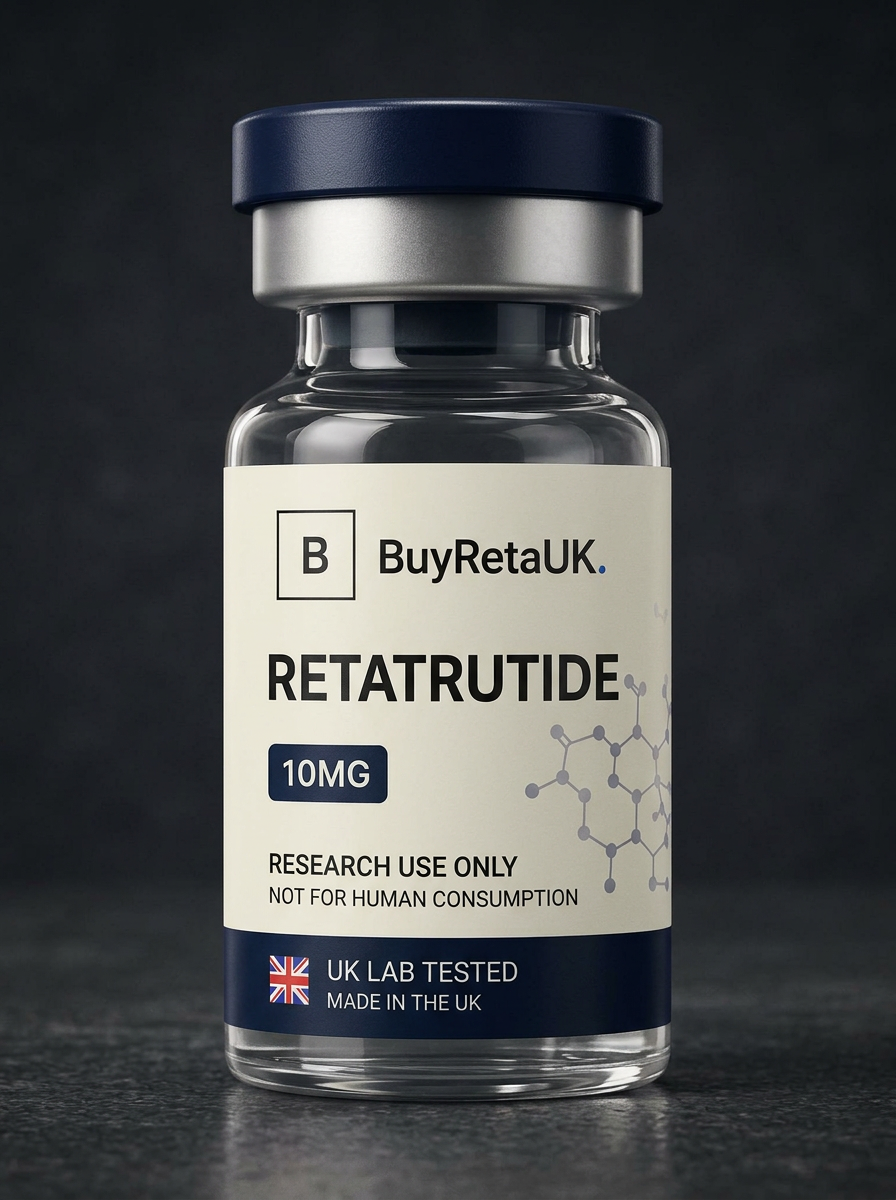
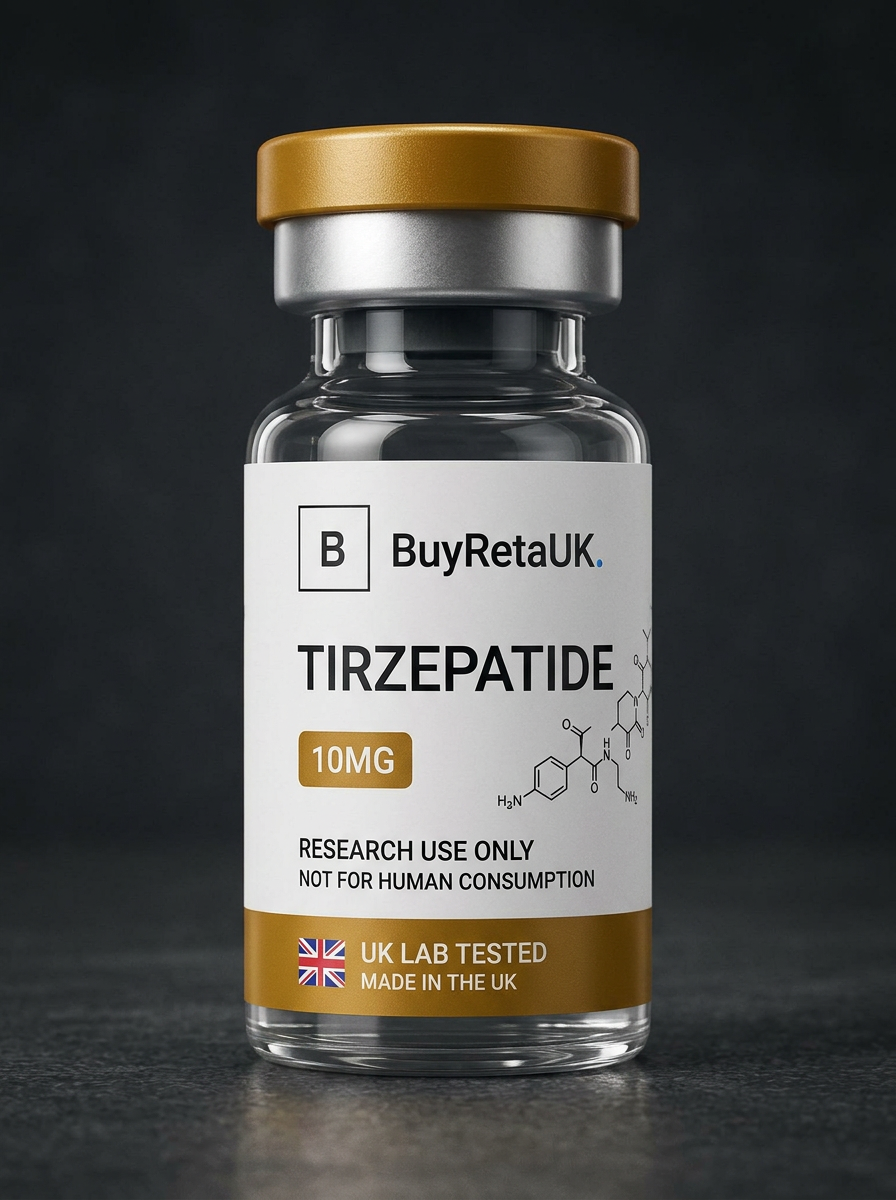
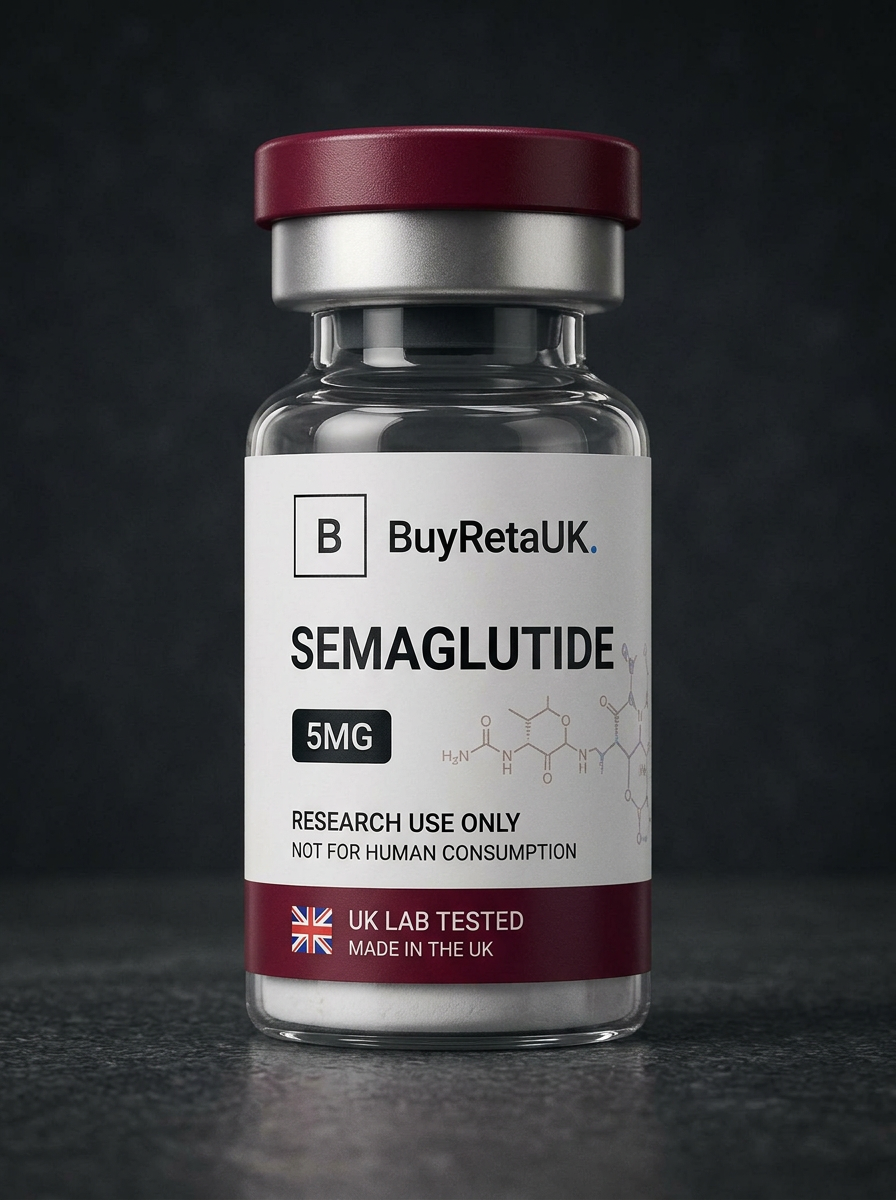
Continue reading.
A laboratory overview of retatrutide (LY3437943) — a triple agonist research peptide acting on the GLP-1, GIP and glucagon receptors.
6 min read →Product ComparisonsSide-by-side comparison of retatrutide and tirzepatide across receptor profile, research context and analytical considerations.
5 min read →Certificates of AnalysisHow to read a peptide certificate of analysis — identity, purity, mass and endotoxin sections explained.
7 min read →Storage & HandlingHow to store lyophilised research peptides and reconstitute them correctly for laboratory use.
4 min read →