For laboratory research use only · Not for human consumptionFree UK next-day delivery
Knowledge journey

Where this sits in the Sema cluster.

Knowledge journey

  1. collectionGLP-1 Research
  2. commercialSema UK
  3. guideWhat is Sema?
  4. guideSema Mechanism of Action
  5. guideSema Research
  6. guideSema Clinical Trials
  7. guideSema Purity
  8. guideSema Storage
  9. comparisonSema vs Tirz
  10. collectionSema catalogue
  11. productBuy Sema
  12. comparisonRT3 vs Sema
Scientific reference · Receptor pharmacology

Sema mechanism of action.

The BuyRetaUK scientific reference for how Sema (NN9535) works — a long-acting selective GLP-1 receptor agonist that engages a single class-B GPCR, and what selective incretin agonism means for laboratory research.

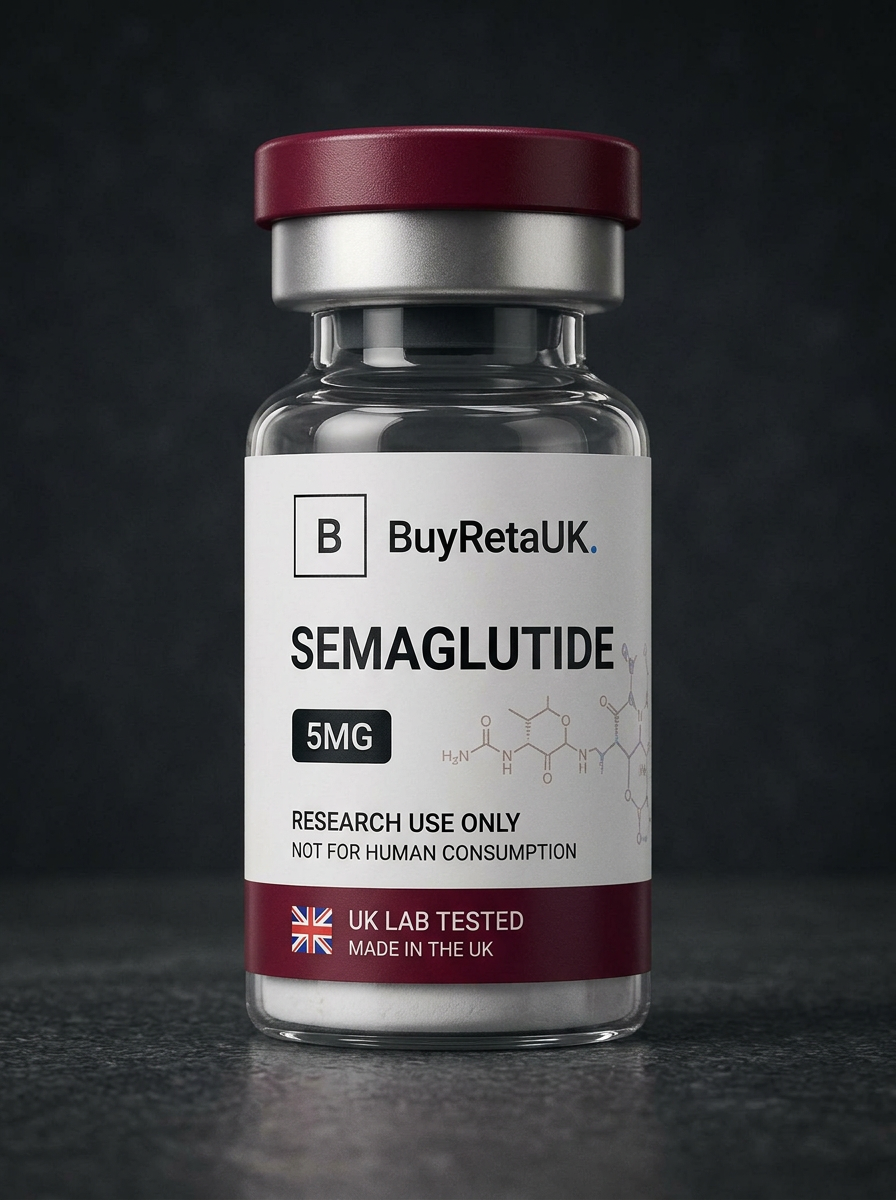
BuyRetaUK Sema research peptide vial — selective GLP-1 receptor agonist
Published
July 2026
Last reviewed
July 2026
Next review
December 2026
Version
v1.1
Reading time
10 min read
Reviewed by
BuyRetaUK Scientific Review Team
Editorial team
BuyRetaUK Editorial Team
Review status
Scientific review complete
Quick summary

Quick summary

Sema is a 31-residue analogue of human GLP-1(7–37) that acts as a selective full agonist at the glucagon-like peptide-1 receptor (GLP-1R) — a class-B G-protein-coupled receptor. Activation couples predominantly to Gαs, driving adenylyl cyclase and cyclic-AMP accumulation. Selective single-receptor pharmacology distinguishes Sema from the dual incretin (Tirz) and triple incretin (RT3) research peptides.

Quick answer

In short.

Sema is a 31-residue analogue of human GLP-1(7–37) that acts as a selective full agonist at the glucagon-like peptide-1 receptor (GLP-1R) — a class-B G-protein-coupled receptor. Activation couples predominantly to Gαs, driving adenylyl cyclase and cyclic-AMP accumulation. Selective single-receptor pharmacology distinguishes Sema from the dual incretin (Tirz) and triple incretin (RT3) research peptides.
Key facts

At a glance.

Compound
Sema (NN9535)
Peptide length
31 amino-acid residues
Receptor target
GLP-1R (selective)
Receptor class
Class B secretin-family GPCR
Primary signalling
Gαs → adenylyl cyclase → cAMP → PKA / EPAC
Mode of action
Selective GLP-1 receptor agonism
Endogenous analogue
GLP-1(7–37)
Half-life extension
C18 fatty-diacid via γGlu-2xOEG linker; AIB at position 8
Dosing frequency (research)
Once-weekly in reported human studies
Intended use
In-vitro laboratory research only
Definitions

Key pharmacological terms.

Selective agonist
A ligand that activates one receptor preferentially — for Sema, GLP-1R without meaningful engagement of the GIP or glucagon receptors.
GLP-1(7–37)
The active endogenous form of glucagon-like peptide-1 released from intestinal L-cells and the reference agonist for GLP-1R pharmacology.
AIB substitution
Substitution of the natural alanine at position 8 of GLP-1 with α-aminoisobutyric acid to block DPP-4 cleavage and stabilise the peptide against enzymatic degradation.
γGlu-2xOEG linker
A γ-glutamate spacer plus two 8-amino-3,6-dioxaoctanoic acid units used to tether the C18 fatty-diacid to Lys26 of the Sema backbone.
Class B GPCR
The secretin-family of G-protein-coupled receptors — large extracellular domains that bind peptide ligands and transduce signals primarily through Gαs.
Albumin binding
Reversible non-covalent association of the fatty-diacid tail with serum albumin, extending circulating half-life without altering receptor engagement.
Overview

Mechanism overview.

Sema (Novo Nordisk development code NN9535) is a 31-residue peptide analogue of human GLP-1(7–37). Two engineered modifications define its pharmacology: an α-aminoisobutyric acid (AIB) substitution at position 8 that blocks proteolytic cleavage by dipeptidyl-peptidase-4, and a C18 fatty-diacid attached to Lys26 through a γ-glutamate–2×OEG linker that promotes reversible binding to serum albumin (Lau et al., 2015; Knudsen & Lau, 2019).

Sema is a selective full agonist at the glucagon-like peptide-1 receptor (GLP-1R), a class-B secretin-family G-protein-coupled receptor. It does not engage the GIP or glucagon receptors at any pharmacologically meaningful concentration — a defining contrast with the dual and triple incretin peptides Tirz and RT3 (Drucker, 2018).

The albumin-binding tail extends the plasma half-life to approximately 165 hours, supporting the once-weekly dosing regimen reported in the clinical literature (Lau et al., 2015). The lipid moiety itself does not contribute to receptor engagement; the receptor pharmacology is driven entirely by the peptide backbone.
Receptor biology

GLP-1 receptor biology.

The GLP-1 receptor is a class-B GPCR expressed on pancreatic β-cells, on neurons in the hypothalamus and brainstem (including the area postrema and nucleus of the solitary tract), and in gastric, cardiovascular and immune tissues. Its natural ligand is GLP-1(7–37) — an incretin released from intestinal L-cells in response to nutrient intake (Campbell & Drucker, 2013).

Structurally, GLP-1R has a large N-terminal extracellular domain that binds the C-terminal helix of the agonist and a seven-transmembrane bundle that engages the peptide N-terminus to initiate signalling. Dominant downstream coupling is via the stimulatory Gαs protein, activation of adenylyl cyclase, and elevation of intracellular cyclic AMP. Downstream effectors include PKA and EPAC (Drucker, 2018).

Receptor binding

Sema receptor binding.

Sema engages GLP-1R with sub-nanomolar potency and behaves as a full agonist for cAMP accumulation relative to GLP-1(7–37) (Lau et al., 2015). The AIB-8 substitution preserves the N-terminal receptor-interacting residues while preventing DPP-4 cleavage between His7 and Ala8 — enzymatic degradation that would otherwise inactivate the peptide within minutes of administration.

The C18 fatty-diacid at Lys26 sits away from the receptor-binding face. In-vitro displacement studies show that the acylation does not meaningfully alter receptor affinity but does reduce the free (non-albumin-bound) fraction of peptide available to bind GLP-1R at any given moment — a slow-release effect that supports sustained receptor engagement across the dosing interval (Knudsen & Lau, 2019).

Signal transduction

Signal transduction.

  1. Sema binds the extracellular domain of GLP-1R.
  2. Conformational change activates the coupled Gαs heterotrimer.
  3. Adenylyl cyclase converts ATP to cyclic AMP.
  4. cAMP activates protein kinase A (PKA) and EPAC2.
  5. PKA and EPAC2 modulate downstream targets: closure of KATP channels, elevation of intracellular Ca²⁺ and potentiation of glucose-stimulated insulin exocytosis in β-cells.
  6. β-arrestin recruitment governs receptor internalisation and desensitisation. Jones et al. (2018) reported reduced β-arrestin engagement for Sema relative to GLP-1 in some model systems.
cAMP signalling

cAMP signalling detail.

In GLP-1R-expressing cell lines, Sema drives a full-agonist cAMP dose-response with potency in the low nanomolar to sub-nanomolar range depending on assay format. cAMP elevation is the primary read-out used in laboratory characterisation of the peptide's mechanism, and single-receptor GLP-1R-expressing HEK293 or CHO systems are the standard reporter platform (Nauck et al., 2021).

Downstream, PKA phosphorylates β-cell substrates including IP3 receptors and voltage-gated Ca²⁺ channels, while EPAC2 potentiates Ca²⁺-triggered exocytosis of insulin granules. Because these steps are downstream of cAMP, they are shared with Tirz's GLP-1R arm and with RT3's GLP-1R arm — the mechanistic differentiation between the three peptides lives upstream, at the receptor complement, not downstream at the second messenger.

Insulin signalling (research context)

Insulin signalling — research context only.

In pancreatic β-cell research models, Sema potentiates glucose-stimulated insulin secretion in a glucose-dependent manner: the response is negligible at low ambient glucose and rises steeply as glucose approaches physiological thresholds. This is the classical incretin effect and it is receptor-mediated, not concentration-driven (Campbell & Drucker, 2013). Discussion here is limited to reported laboratory characterisation.

Glucagon modulation (research context)

α-cell / glucagon modulation.

Sema does not engage the glucagon receptor. Reported reductions in glucagon secretion at hyperglycaemia are indirect and attributed to paracrine effects of GLP-1R activation on the pancreatic islet — including β-cell somatostatin release from δ-cells and the local insulin milieu (Drucker, 2018). This contrasts sharply with RT3's direct GCGR pharmacology, discussed in the RT3 mechanism reference.

Gastric emptying (research discussion)

Gastric emptying mechanisms.

Sema slows gastric emptying through central and vagal GLP-1R-mediated pathways. Reported effects on gastric-emptying rate diminish with continued exposure — a tachyphylaxis pattern well described for GLP-1R agonists — while the central satiety pathway persists. Gabery et al. (2020) mapped sema-responsive neurons across circumventricular organs and downstream hypothalamic targets in rodents, framing the neural circuitry that underlies reported appetite effects.

Rationale

Why GLP-1 receptor agonism matters.

The GLP-1 receptor is the founding target of the incretin therapeutic class and the mechanistic reference point against which every dual and triple agonist is characterised. Sema sets the standard for selective GLP-1R pharmacology: a well-behaved full agonist, extensively profiled in the literature, and a natural comparator peptide in any receptor-panel experiment (Nauck et al., 2021).

For laboratory research, selective GLP-1R agonism means a single-receptor assay is sufficient to characterise Sema's activity. That simplicity is both an experimental advantage — fewer variables, cleaner data — and a limitation, because the peptide does not exercise the two- or three-receptor assay coverage required for dual and triple agonists.

Comparison

Sema, Tirz and RT3 compared.

AttributeSemaTirzRT3
Receptor targetsGLP-1R onlyGIPR · GLP-1RGLP-1R · GIPR · GCGR
Agonist profileSelective GLP-1RBalanced dual incretinBalanced triple
Primary signallingGαs / cAMP at GLP-1RGαs / cAMP at both receptorsGαs / cAMP at all three receptors
Peptide length31 residues (GLP-1 analogue)39 residues (GIP-based)39 residues (GIP-based)
Distinguishing mechanismSingle incretin axis; reference full agonistAdds GIP incretin axisAdds GCGR energy-expenditure axis
Assay coverage requiredGLP-1R single-receptorGIPR + GLP-1R panelGIPR + GLP-1R + GCGR panel
Half-life extensionC18 fatty-diacid → once weeklyC20 fatty-diacid → once weeklyFatty-diacid → once weekly

A full side-by-side treatment of the single vs triple comparison is available in RT3 vs Sema.

Laboratory relevance

Laboratory research relevance.

  1. Single-receptor characterisation. A GLP-1R-expressing HEK293 or CHO cAMP reporter line is sufficient to characterise Sema's mechanism.
  2. Reference peptide. Use GLP-1(7–37) as the anchor comparator; Sema should reproduce full-agonist behaviour with a shifted potency profile.
  3. Signalling bias. Pair cAMP with β-arrestin recruitment to capture the reduced β-arrestin engagement described by Jones et al. (2018).
  4. Comparator role. Sema is the natural reference peptide in dual (Tirz) and triple (RT3) agonist assay panels.
  5. Peptide integrity. Confirm identity by mass spectrometry and purity by HPLC-UV before every experiment — see the Sema UK hub for batch data.
  6. Batch traceability. Log the batch number for every experiment and cross-reference the verification library for the corresponding COA.
Laboratory quality

Quality standards.

Before you buy

Buying considerations.

  • Require batch-specific analytical data

    Mechanism-of-action work is only interpretable if the peptide's identity and purity are documented for the exact batch used.

  • Prefer ≥99% HPLC-UV purity

    Related-substance impurities can present altered receptor pharmacology and confound single-agonist assay readouts, particularly cAMP potency comparisons.

  • Confirm identity by mass spectrometry

    Purity does not imply identity — MS confirms the peak in the chromatogram is the intended 31-residue AIB-substituted, lipidated sequence.

  • Standardise a single vendor per study

    Cross-vendor variation in fatty-diacid stoichiometry or free-peptide fraction is a common source of drift in comparative GLP-1R experiments.

FAQs

Frequently asked questions.

What receptor does Sema activate?[+]

Sema is a selective agonist at the glucagon-like peptide-1 receptor (GLP-1R), a class-B G-protein-coupled receptor. It does not engage the GIP or glucagon receptors at meaningful potency, which is the defining feature of its single-agonist pharmacology.

How does selective GLP-1 agonism differ from dual or triple agonism?[+]

Tirz adds GIP receptor activity as a balanced dual agonist. RT3 extends the profile further with a third receptor (glucagon). Sema remains a single-incretin-axis peptide, engaging GLP-1R only.

Is Sema a modified GLP-1?[+]

Yes. The 31-residue backbone is a close analogue of human GLP-1(7–37) with two engineered changes: substitution of alanine at position 8 with α-aminoisobutyric acid (AIB) to resist DPP-4 cleavage, and attachment of a C18 fatty-diacid to Lys26 via a γGlu-2xOEG linker to enable albumin binding.

What signalling pathways does Sema engage?[+]

GLP-1R is coupled predominantly to Gαs. Sema binding activates adenylyl cyclase, elevates intracellular cAMP and drives downstream PKA and EPAC signalling. β-arrestin recruitment occurs but is less pronounced than at native GLP-1 in some reported systems (Jones et al., 2018).

How does the fatty-acid tail change the mechanism?[+]

The C18 diacid does not participate in receptor engagement. It supports reversible non-covalent binding to serum albumin, extending circulating half-life to approximately 165 hours and enabling the once-weekly regimens reported in the clinical literature (Lau et al., 2015).

Why does mechanism of action matter for laboratory research?[+]

Receptor selectivity determines assay design. Sema can be characterised on a single GLP-1R-expressing cell system, but the same design under-reports the pharmacology of dual or triple agonists — a critical caveat when using Sema as a comparator peptide.

Does Sema cross the blood–brain barrier?[+]

Peripheral GLP-1R activation dominates the reported pharmacology, but Sema is also detected in circumventricular CNS regions (area postrema, subfornical organ) where GLP-1R engagement is implicated in satiety and food-intake signalling (Gabery et al., 2020).

References

Scientific sources & further reading.

  1. [1]Lau J. et al. (2015) Discovery of the once-weekly glucagon-like peptide-1 (GLP-1) analogue Sema. Journal of Medicinal Chemistry, 58(18): 7370–7380 DOI: 10.1021/acs.jmedchem.5b00726DOI →
  2. [2]Knudsen L.B., Lau J. (2019) The discovery and development of liraglutide and Sema. Frontiers in Endocrinology, 10: 155 DOI: 10.3389/fendo.2019.00155DOI →
  3. [3]Jones B. et al. (2018) Targeting GLP-1 receptor trafficking to improve agonist efficacy. Nature Communications, 9: 1602 DOI: 10.1038/s41467-018-03941-2DOI →
  4. [4]Gabery S. et al. (2020) Sema lowers body weight in rodents via distributed neural pathways. JCI Insight, 5(6): e133429 DOI: 10.1172/jci.insight.133429DOI →
  5. [5]Marso S.P. et al. (2016) Sema and cardiovascular outcomes in patients with type 2 diabetes. New England Journal of Medicine, 375: 1834–1844 DOI: 10.1056/NEJMoa1607141DOI →
  6. [6]Nauck M.A., Quast D.R., Wefers J., Meier J.J. (2021) GLP-1 receptor agonists in the treatment of type 2 diabetes — state-of-the-art. Molecular Metabolism, 46: 101102 DOI: 10.1016/j.molmet.2020.101102DOI →
  7. [7]Drucker D.J. (2018) Mechanisms of action and therapeutic application of glucagon-like peptide-1. Cell Metabolism, 27(4): 740–756 DOI: 10.1016/j.cmet.2018.03.001DOI →
  8. [8]Campbell J.E., Drucker D.J. (2013) Pharmacology, physiology, and mechanisms of incretin hormone action. Cell Metabolism, 17(6): 819–837 DOI: 10.1016/j.cmet.2013.04.008DOI →
  9. [9]Wilding J.P.H. et al. (2021) Once-weekly Sema in adults with overweight or obesity. New England Journal of Medicine, 384: 989–1002 DOI: 10.1056/NEJMoa2032183DOI →

Peer-reviewed citations are added as each article is expanded. See our editorial standards for our sourcing and accuracy commitments.

Editorial team
BuyRetaUK Editorial Team
Author · BuyRetaUK

The BuyRetaUK editorial team publishes laboratory-focused reference content on research peptides, analytical methods and Certificates of Analysis. All articles are written for in-vitro research contexts only.

View profile →
Scientific reviewer
BuyRetaUK Scientific Review Team
Scientific reviewer

Every editorial article is reviewed against our accuracy commitment and quality-assurance checklist before publication. Named reviewer profiles are added as our reviewer network expands.

View profile →
Editorial standards

How this content is produced.

Every article follows a documented editorial process — sourcing, scientific review, update cadence and correction policy — so researchers can rely on what we publish.

Read the full editorial standards →
Commercial journey

Your research-to-checkout journey.

Educational first. Each step is optional — start wherever you are in your research.

  1. Step 1ResearchUnderstand mechanism, class and study context.
  2. Step 2ComparisonSee how compounds differ in receptor profile.
  3. Step 3Laboratory qualityHPLC-UV purity, mass-spec identity, endotoxin data.
  4. Step 4Certificates of analysisVerify your batch in the public COA library.
  5. Step 5ProductsChoose a strength — every vial ships with COA.
  6. Step 6CheckoutEncrypted checkout, temperature-controlled UK dispatch.
Recommended reading path

How to research this topic.

Recommended reading path

  1. Step 01
    Start here — What is Sema?

    Compound overview, receptor profile and research framing.

  2. Step 02
    Mechanism of action

    GLP-1 receptor engagement, Gαs / cAMP signalling and single-agonist pharmacology.

  3. Step 03
    Research landscape

    Published laboratory evidence, discovery lineage and research applications.

  4. Step 04
    Clinical trial evidence

    SUSTAIN, STEP and SELECT — published Phase 3 evidence summary.

  5. Step 05
    Purity

    HPLC-UV release, mass-spec identity and batch verification for Sema.

  6. Step 06
    Storage & reconstitution

    Lyophilised handling, bacteriostatic water reconstitution and in-use stability for Sema.

  7. Step 07
    Sema vs Tirz

    Selective GLP-1 receptor agonist vs dual GIP/GLP-1 agonist — balanced scientific comparison.

  8. Step 08
    Commercial hub — Sema UK

    Research-grade Sema with batch-specific COA.

Topic overview

Sema at a glance.

Topic overview

Comparisons
Knowledge Hub
Collections
Batch verification

Every batch of Sema ships with a third-party HPLC and mass-spec Certificate of Analysis. Browse the live COA library to verify your lot.

Research tools
FAQ
Is RT3 approved for human use?

No. RT3 is supplied strictly for laboratory research and is not approved for human or veterinary administration.

Read: What is RT3?
What receptors does RT3 act on?

In published research it has been characterised as a triple agonist acting on the GLP-1, GIP and glucagon receptors.

Read: What is RT3?
How should RT3 be stored?

Lyophilised vials are stored at 2–8°C, protected from light. Once reconstituted with bacteriostatic water, store refrigerated and use within 30 days.

Read: What is RT3?
Why is RT3 of interest to researchers?

Its simultaneous activity at three incretin-related receptors makes it a useful tool compound for probing combined signalling pathways in metabolic research.

Read: RT3 Research Overview
Next steps

Continue your research.