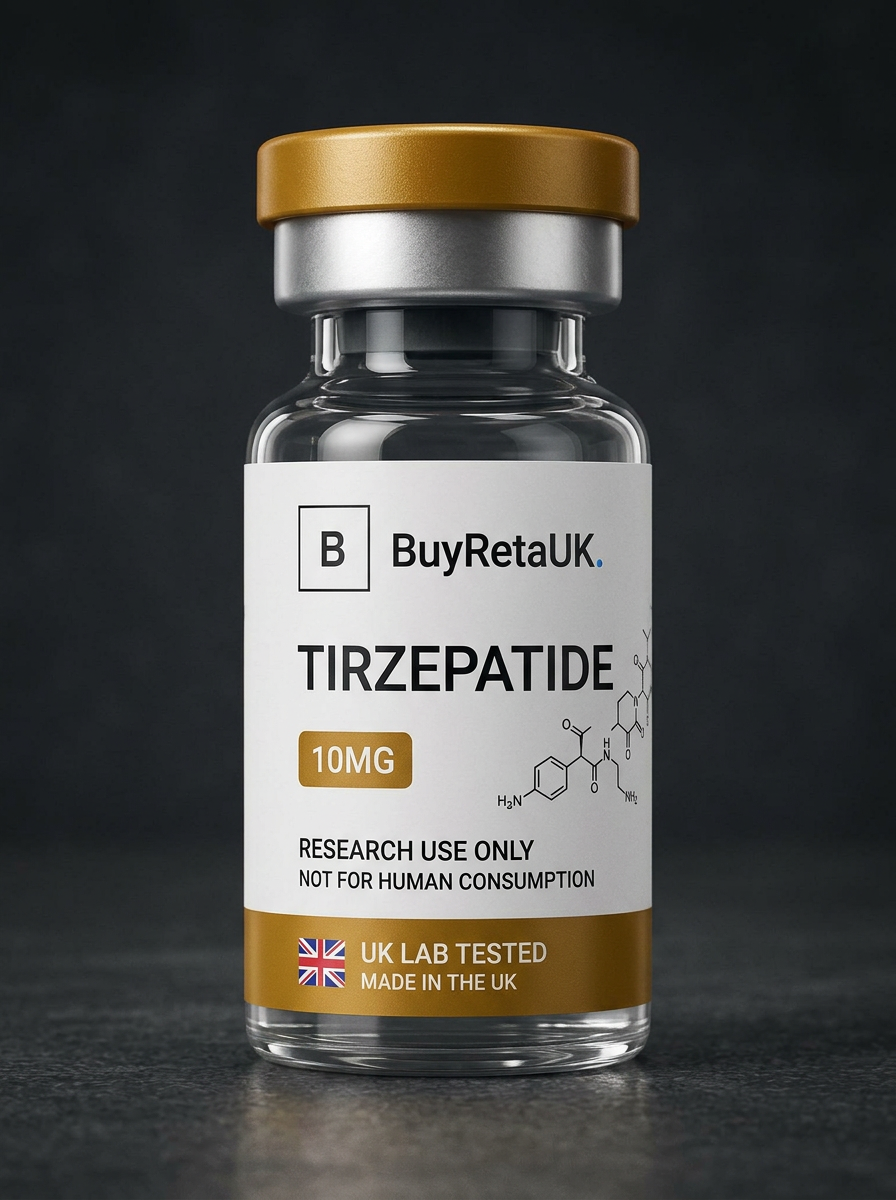
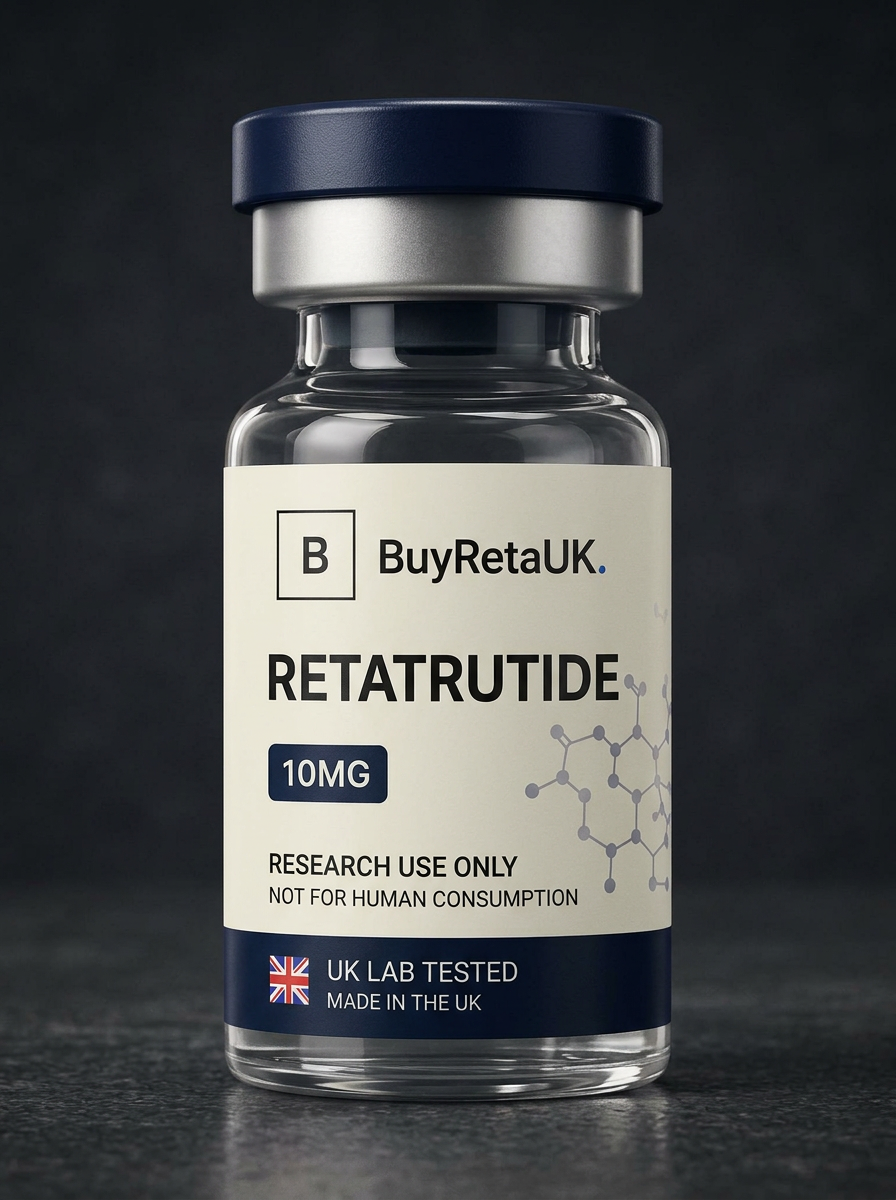
The BuyRetaUK editorial team publishes laboratory-focused reference content on research peptides, analytical methods and Certificates of Analysis. All articles are written for in-vitro research contexts only.
View profile →Where this sits in the Semaglutide cluster.
Knowledge journey
- collectionGLP-1 Research
- commercialSemaglutide UK
- guideWhat is Semaglutide?
- guideSemaglutide Mechanism of Action
- guideSemaglutide Research
- guideSemaglutide Clinical Trials
- guideSemaglutide Purity
- guideSemaglutide Storage
- comparisonSemaglutide vs Tirzepatide
- collectionSemaglutide catalogue
- productBuy Semaglutide
- comparisonRetatrutide vs Semaglutide
Semaglutide vs Tirzepatide.
A balanced UK laboratory comparison of semaglutide (NN9535) and tirzepatide (LY3298176) — selective GLP-1 receptor agonist versus dual GIP/GLP-1 receptor agonist. Receptor pharmacology, peptide engineering, published evidence and analytical release, framed for in-vitro research context only. No medical guidance.
- Batch-specific COA available
- Laboratory research use only
- Independent third-party testing
- UK dispatch
- Secure checkout


- Published
- July 2026
- Last reviewed
- July 2026
- Next review
- December 2026
- Version
- v1.1
- Reading time
- 9 min read
- Reviewed by
- BuyRetaUK Scientific Review Team
- Editorial team
- BuyRetaUK Editorial Team
- Review status
- Scientific review complete
Quick summary
Semaglutide is a selective GLP-1 receptor agonist peptide (Novo Nordisk code NN9535). Tirzepatide is a dual GIP and GLP-1 receptor agonist peptide (Eli Lilly code LY3298176). Both are long-acting incretin research peptides supplied as lyophilised powder at ≥99% HPLC purity. Semaglutide is the reference single-receptor comparator anchored by the SUSTAIN and STEP trial programmes; tirzepatide is the reference dual-receptor comparator anchored by the SURPASS and SURMOUNT programmes. This page is a scientific comparison for laboratory research — it is not medical advice and does not recommend either peptide for human use.
In short.
At a glance.
- Semaglutide receptor profile
- GLP-1R only (selective single agonist)
- Tirzepatide receptor profile
- GIPR + GLP-1R (dual agonist)
- Development codes
- NN9535 (Novo Nordisk) · LY3298176 (Eli Lilly)
- Peptide backbone
- GLP-1 analogue (NN9535) · GIP-based chimera (LY3298176)
- Lipidation strategy
- C18 diacid via γGlu-2xOEG on Lys26 (semaglutide) · C20 diacid via γGlu-2xAEEA on Lys20 (tirzepatide)
- Reference Phase 3 programmes
- SUSTAIN, STEP (semaglutide) · SURPASS, SURMOUNT (tirzepatide)
- Direct head-to-head
- SURPASS-2 (tirzepatide vs semaglutide, T2D research)
- Discovery disclosures
- Lau et al. 2015 (semaglutide) · Coskun et al. 2018 (tirzepatide)
- Analytical release
- Both: ≥99% HPLC-UV · ESI-MS identity · endotoxin per batch
- Page scope
- Scientific comparison for laboratory research — no medical guidance
Key terms.
- Semaglutide (NN9535)
- Novo Nordisk-originated selective GLP-1 receptor agonist peptide engineered for once-weekly dosing via C18 fatty-diacid lipidation and Aib8 substitution.
- Tirzepatide (LY3298176)
- Eli Lilly-originated dual GIP and GLP-1 receptor agonist peptide built on a GIP-based backbone with a C20 fatty-diacid side chain enabling once-weekly PK.
- GLP-1 receptor agonist
- A peptide that binds and activates the glucagon-like peptide-1 receptor, a class-B GPCR expressed on pancreatic β-cells, brain-stem nuclei and enteric neurons.
- Dual agonist
- A single peptide molecule engineered to activate two receptors — for tirzepatide, GIPR and GLP-1R — from the same binding event population.
- GIP receptor
- The class-B GPCR bound by glucose-dependent insulinotropic polypeptide, co-expressed with GLP-1R on β-cells and adipose tissue.
- Incretin
- A gut-derived hormone that potentiates insulin secretion in response to nutrient intake — GLP-1 and GIP are the two canonical incretins.
- SUSTAIN / STEP
- The two pivotal Phase 3 semaglutide programmes: SUSTAIN (T2D research) and STEP (overweight and obesity research).
- SURPASS / SURMOUNT
- The two pivotal Phase 3 tirzepatide programmes: SURPASS (T2D research) and SURMOUNT (overweight and obesity research).
Overview of the comparison.
Semaglutide and tirzepatide are the two most-referenced long-acting incretin research peptides in modern metabolic pharmacology. They occupy adjacent points on the same class ladder: a selective GLP-1 receptor agonist on one side, a dual GIP + GLP-1 receptor agonist on the other. The peptides share the same broad design language — long-chain fatty-diacid lipidation, γGlu spacer chemistry, DPP-4-resistant N-terminal modifications, once-weekly PK — but the pharmacology diverges at the receptor.
This page compares the two peptides on the axes that matter for laboratory work: receptor pharmacology, peptide engineering, published evidence and analytical release. Deep mechanism material lives on the dedicated semaglutide mechanism page and the published trial base is summarised on semaglutide clinical trials.
The two peptides.
Semaglutide (NN9535)
A selective GLP-1 receptor agonist engineered from the native GLP-1(7-37) sequence. Aib8 confers DPP-4 resistance, Arg34 removes a lysine glycosylation risk, and a γGlu-2xOEG spacer conjugates a C18 fatty-diacid to Lys26 for high-affinity albumin binding and once-weekly PK. Reference peptide for isolated GLP-1R pharmacology.
Shop Semaglutide →Tirzepatide (LY3298176)
A dual GIP and GLP-1 receptor agonist built on a GIP-based backbone with αMe-Phe1 and Aib substitutions for enzymatic stability. A γGlu-2xAEEA linker anchors a C20 fatty-diacid to Lys20. Willard 2020 characterises the pharmacology as GIP-biased — imbalanced dual agonism rather than symmetric co-activation.
Shop Tirzepatide →Receptor comparison.
Semaglutide binds the GLP-1 receptor as a full agonist and does not engage the GIP receptor at pharmacologically relevant concentrations. Downstream signalling proceeds through Gαs, adenylyl cyclase activation and cAMP-dependent β-cell insulinotropic response, with parallel β-arrestin recruitment.
Tirzepatide binds both GIPR and GLP-1R. Willard et al. (2020) characterised the pharmacology as imbalanced — near-native GIPR activation combined with attenuated GLP-1R β-arrestin recruitment relative to the endogenous ligand. That imbalance is a defining feature of LY3298176 and cannot be reproduced by mixing a selective GIPR agonist with a selective GLP-1RA.
Molecular structure comparison.
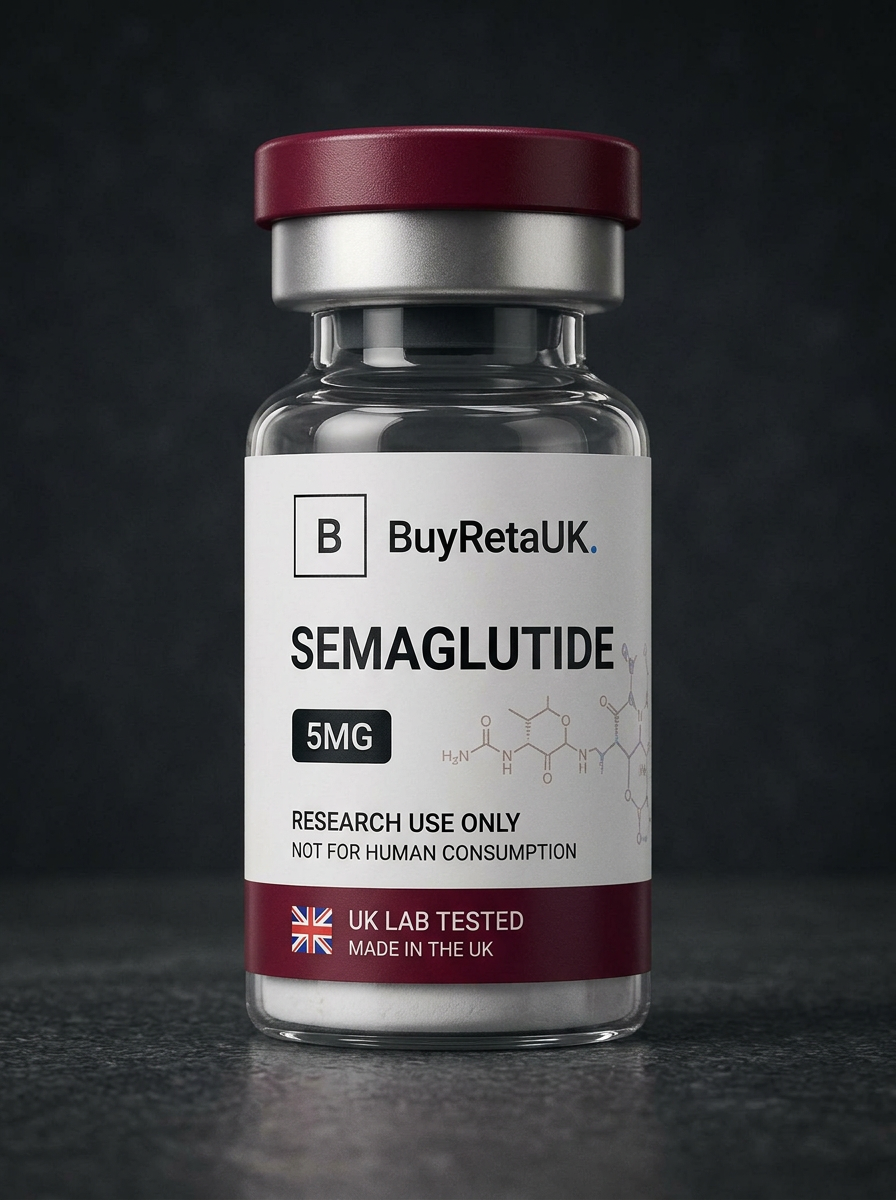
Both peptides use a fatty-diacid-anchored albumin-binding strategy but on different backbones. Semaglutide inherits the GLP-1(7-37) sequence with three deliberate substitutions (Aib8, Arg34, Lys26) and a C18 diacid attached through a γGlu-2×OEG spacer. Tirzepatide is engineered on a GIP scaffold with αMe-Phe1, Aib2 and Aib13 substitutions, a Lys20-anchored C20 fatty-diacid attached through a γGlu-2×AEEA spacer, and additional stability substitutions that retain GLP-1R affinity while preserving GIPR engagement.
For analytical release, the different peptide masses (~4113 Da for semaglutide vs ~4813 Da for tirzepatide) yield distinct ESI-MS identity spectra and non-overlapping HPLC retention windows on the reversed-phase methods used at release.
Mechanism comparison.
Both peptides ultimately drive glucose-dependent β-cell insulin secretion, delay gastric emptying and engage central appetite circuits. The route to that shared endpoint differs. Semaglutide amplifies a single incretin axis. Tirzepatide layers GIPR activation on top of GLP-1R activation, with the GIP arm carrying most of the receptor-level contribution in the Willard 2020 characterisation.
For deeper mechanism material — receptor structural biology, cAMP kinetics, biased signalling — see the dedicated semaglutide mechanism of action page. This comparison page keeps mechanism discussion at the class-and-receptor level.
Published evidence comparison.
Semaglutide is anchored by the SUSTAIN and STEP Phase 3 programmes, supplemented by the SELECT cardiovascular outcome trial and the PIONEER oral-formulation programme. Tirzepatide is anchored by the SURPASS and SURMOUNT Phase 3 programmes. The single published direct head-to-head is SURPASS-2 (Frías 2021), which paired tirzepatide against semaglutide 1 mg in a T2D research population.
Cross-programme reads should stay indirect at the meta-analysis level rather than pooled at the patient level. Full programme-level detail for semaglutide lives on semaglutide clinical trials.
Laboratory research comparison.
In laboratory workflows the two peptides play complementary reference roles. Semaglutide is the default single-receptor GLP-1RA comparator in receptor-pharmacology, PK and stability studies. Tirzepatide is the default dual-receptor comparator in studies that need to interrogate combined incretin activity or reproduce the SURPASS/SURMOUNT citation framework.
When a research question spans single, dual and triple incretin agonism, the natural three-way comparator set is semaglutide, tirzepatide and retatrutide — each occupying a distinct receptor architecture within the same broad class.
Purity comparison.
Both peptides are released against a ≥99% HPLC-UV purity threshold with ESI-MS identity confirmation and endotoxin reporting on every batch. The analytical framework is identical; the target retention times and mass windows are compound-specific and reported on the batch-specific COA. Full HPLC methodology for semaglutide lives on the dedicated semaglutide purity page.
Storage comparison.
Both peptides ship as lyophilised powder with equivalent bench handling. Lyophilised long-term storage at −20 °C (protected from light), reconstitution with bacteriostatic water at bench-appropriate volumes, and refrigerated (2–8 °C) in-use stability of ~4–6 weeks under validated conditions. Detailed reconstitution and stability guidance for semaglutide lives on the dedicated semaglutide storage page.
Side-by-side specifications.
| Feature | Semaglutide | Tirzepatide |
|---|---|---|
| Drug class | Selective GLP-1 receptor agonist | Dual GIP + GLP-1 receptor agonist |
| Development code | NN9535 (Novo Nordisk) | LY3298176 (Eli Lilly) |
| Primary receptor(s) | GLP-1R | GIPR · GLP-1R (imbalanced / GIP-biased signalling) |
| Agonist architecture | Single-receptor selective agonist | Dual-receptor unimolecular agonist |
| Peptide length | 31 residues (GLP-1 analogue) | 39 residues (GIP-based chimera) |
| Structural modifications | Aib8 · Arg34 · Lys26-γGlu-2xOEG-C18 diacid | αMe-Phe1 · Aib2/Aib13 · Lys20-γGlu-2xAEEA-C20 diacid |
| Reference Phase 3 programmes | SUSTAIN · STEP · SELECT · PIONEER | SURPASS · SURMOUNT |
| Representative publications | Lau 2015 · Marso 2016 · Wilding 2021 · Lincoff 2023 | Coskun 2018 · Willard 2020 · Frías 2021 · Jastreboff 2022 |
| Typical laboratory focus | Isolated GLP-1R pharmacology · reference GLP-1RA comparator | Combined GIP+GLP-1 signalling · dual-receptor comparator |
| Analytical testing | ≥99% HPLC-UV · ESI-MS · endotoxin | ≥99% HPLC-UV · ESI-MS · endotoxin |
| Storage considerations | Lyophilised: −20 °C · reconstituted: 2–8 °C, ~4–6 weeks | Lyophilised: −20 °C · reconstituted: 2–8 °C, ~4–6 weeks |
| Commercial availability on BuyRetaUK | Yes — batch-specific COA with every order | Yes — batch-specific COA with every order |
Strengths and limitations.
Semaglutide
Strengths
Largest single-receptor GLP-1RA evidence base · dedicated CV outcome trial (SELECT) · deep receptor-pharmacology literature · established reference peptide in GLP-1R structural biology.
Limitations
Single-receptor mechanism cannot inform GIP-axis questions · dose-response saturates at the selective GLP-1R threshold · head-to-head data against dual agonists remain limited to SURPASS-2.
Tirzepatide
Strengths
Only reference-grade dual GIP/GLP-1RA in wide research supply · imbalanced (GIP-biased) signalling profile characterised by Willard 2020 · large SURPASS/SURMOUNT dataset · direct head-to-head evidence against semaglutide.
Limitations
Dual-receptor mechanism confounds isolation of GLP-1R contribution · relatively younger evidence base than semaglutide · fewer independent structural-biology studies at the receptor complex to date.
When researchers choose each.
| Research context | Reference peptide | Why |
|---|---|---|
| Isolating GLP-1 receptor biology | Semaglutide | Selective single-receptor engagement removes GIP contribution from the read-out, and NN9535 is the most-cited reference GLP-1RA in modern receptor-pharmacology literature. |
| Investigating dual-incretin synergy | Tirzepatide | Simultaneous GIP + GLP-1R activation from a single molecule is the defining feature of LY3298176 and cannot be reproduced with a selective GLP-1RA. |
| Citing a Phase 3 comparator in obesity research | Either | STEP (semaglutide 2.4 mg) and SURMOUNT (tirzepatide 5/10/15 mg) are both accepted programme-level citations; choice follows the target manuscript's comparator framing. |
| Reproducing the SURPASS-2 head-to-head design | Both | SURPASS-2 explicitly paired tirzepatide against semaglutide 1 mg; laboratory replication of the citation framework requires matched reference lots of both peptides. |
| Positioning against the triple agonist axis | Cross-reference retatrutide | Where the research question spans single, dual and triple incretin agonism, semaglutide and tirzepatide are the two lower-order reference points against retatrutide (LY3437943). |
Quality standards.
Reverse-phase HPLC quantifies purity as a percentage of total peak area. Release specification: ≥99%.
Learn more →Certificate of AnalysisEvery batch ships with a batch-specific COA reporting identity, purity and appearance.
Learn more →Laboratory QualityIndependent third-party analysis, temperature-controlled UK storage and full batch traceability.
Learn more →Batch VerificationCross-reference the batch number printed on your vial against our live COA library.
Learn more →Storage StandardsLyophilised at 2–8°C protected from light. Reconstituted stability ~30 days at 2–8°C.
Learn more →FAQs.
What is the core scientific difference between semaglutide and tirzepatide?[+]
Semaglutide activates a single receptor — the GLP-1 receptor. Tirzepatide activates two receptors from a single molecule — GIP and GLP-1. That receptor architecture is the anchor difference and drives every downstream comparison of pharmacology, published evidence and laboratory framing.
Which peptide is 'stronger' in the research literature?[+]
Head-to-head published evidence is limited but well-characterised: SURPASS-2 (Frías et al., 2021, NEJM) compared tirzepatide against semaglutide 1 mg in a T2D research population and reported greater HbA1c reduction across the three tirzepatide dose arms. This is a single-study read-out and does not translate into a recommendation — comparative interpretation belongs to the peer-reviewed literature, not to a supplier page.
Are they in the same drug class?[+]
They are in the same broad incretin class but different subclasses. Semaglutide is a selective GLP-1 receptor agonist. Tirzepatide is a dual GIP/GLP-1 receptor agonist. Retatrutide extends the class further to a triple agonist (GLP-1 + GIP + glucagon).
Do the peptides share structural features?[+]
Both are 39–40-residue peptides with a fatty-diacid side chain conjugated to a lysine, engineered for albumin binding and once-weekly PK. The backbones differ: semaglutide is a GLP-1 analogue with an Aib8 substitution and a Lys26-anchored γGlu-linked C18 diacid; tirzepatide uses a GIP-based scaffold with a Lys20-anchored γGlu-linked C20 diacid and a modified DPP-4-resistant N-terminus.
How does the published evidence compare?[+]
Semaglutide is anchored by SUSTAIN 1 – SUSTAIN 10 (T2D research), STEP 1 – STEP 8 (obesity research) and SELECT (CV outcomes). Tirzepatide is anchored by SURPASS 1 – SURPASS 6 (T2D research) and SURMOUNT 1 – SURMOUNT 4 (obesity research). Both datasets are large, randomised and peer-reviewed. Cross-programme comparisons are typically indirect at the meta-analysis level, with SURPASS-2 as the single direct head-to-head.
Are storage and handling requirements different?[+]
Both are supplied as lyophilised powder with equivalent laboratory handling: cold-chain storage of the lyophilised material, reconstitution with bacteriostatic water at bench-appropriate volumes, and refrigerated in-use stability. Peptide-specific detail lives on the dedicated semaglutide storage page; tirzepatide handling matches the same reconstitution framework.
Are the purity specifications comparable?[+]
Yes — BuyRetaUK releases both peptides against a ≥99% HPLC-UV purity threshold with ESI-MS identity confirmation and endotoxin reporting per batch. The analytical framework is identical; the target masses and HPLC retention profiles differ per compound and are reported on the batch-specific COA.
Does this page recommend one peptide over the other for research?[+]
No. This is a balanced scientific comparison. Which peptide a laboratory selects depends on the receptor question under investigation, the reference programme being cited and the comparator design already published in the target literature.
Does this page provide medical or treatment advice?[+]
No. BuyRetaUK supplies both peptides strictly for in-vitro laboratory research. Nothing here should be interpreted as medical, prescribing, dosing or treatment guidance for humans or animals.
Scientific sources & further reading.
- [1]Lau J. et al. (2015) Discovery of the once-weekly glucagon-like peptide-1 (GLP-1) analogue semaglutide. Journal of Medicinal Chemistry, 58(18): 7370–7380 DOI: 10.1021/acs.jmedchem.5b00726DOI →
- [2]Coskun T. et al. (2018) LY3298176, a novel dual GIP and GLP-1 receptor agonist for the treatment of type 2 diabetes mellitus: from discovery to clinical proof of concept. Molecular Metabolism, 18: 3–14 DOI: 10.1016/j.molmet.2018.09.009DOI →
- [3]Willard F.S. et al. (2020) Tirzepatide is an imbalanced and biased dual GIP and GLP-1 receptor agonist. JCI Insight, 5(17): e140532 DOI: 10.1172/jci.insight.140532DOI →
- [4]Knudsen L.B., Lau J. (2019) The discovery and development of liraglutide and semaglutide. Frontiers in Endocrinology, 10: 155 DOI: 10.3389/fendo.2019.00155DOI →
- [5]Drucker D.J. (2018) Mechanisms of action and therapeutic application of glucagon-like peptide-1. Cell Metabolism, 27(4): 740–756 DOI: 10.1016/j.cmet.2018.03.001DOI →
- [6]Nauck M.A., Quast D.R., Wefers J., Meier J.J. (2021) GLP-1 receptor agonists in the treatment of type 2 diabetes — state-of-the-art. Molecular Metabolism, 46: 101102 DOI: 10.1016/j.molmet.2020.101102DOI →
- [7]Frías J.P. et al. (2021) Tirzepatide versus semaglutide once weekly in patients with type 2 diabetes (SURPASS-2). New England Journal of Medicine, 385(6): 503–515 DOI: 10.1056/NEJMoa2107519DOI →
- [8]Wilding J.P.H. et al. (2021) Once-weekly semaglutide in adults with overweight or obesity (STEP 1). New England Journal of Medicine, 384(11): 989–1002 DOI: 10.1056/NEJMoa2032183DOI →
- [9]Jastreboff A.M. et al. (2022) Tirzepatide once weekly for the treatment of obesity (SURMOUNT-1). New England Journal of Medicine, 387(3): 205–216 DOI: 10.1056/NEJMoa2206038DOI →
- [10]Rubino D.M. et al. (2022) Effect of weekly subcutaneous semaglutide vs daily liraglutide on body weight in adults with overweight or obesity without diabetes (STEP 8). JAMA, 327(2): 138–150 DOI: 10.1001/jama.2021.23619DOI →
Peer-reviewed citations are added as each article is expanded. See our editorial standards for our sourcing and accuracy commitments.
Every editorial article is reviewed against our accuracy commitment and quality-assurance checklist before publication. Named reviewer profiles are added as our reviewer network expands.
View profile →How this content is produced.
Every article follows a documented editorial process — sourcing, scientific review, update cadence and correction policy — so researchers can rely on what we publish.
Read the full editorial standards →Your research-to-checkout journey.
Educational first. Each step is optional — start wherever you are in your research.
- Step 1ResearchUnderstand mechanism, class and study context.
- Step 2ComparisonSee how compounds differ in receptor profile.
- Step 3Laboratory qualityHPLC-UV purity, mass-spec identity, endotoxin data.
- Step 4Certificates of analysisVerify your batch in the public COA library.
- Step 5ProductsChoose a strength — every vial ships with COA.
- Step 6CheckoutEncrypted checkout, temperature-controlled UK dispatch.
How to research this topic.
Recommended reading path
- Step 01Start here — What is Semaglutide?
Compound overview, receptor profile and research framing.
- Step 02Mechanism of action
GLP-1 receptor engagement, Gαs / cAMP signalling and single-agonist pharmacology.
- Step 03Research landscape
Published laboratory evidence, discovery lineage and research applications.
- Step 04Clinical trial evidence
SUSTAIN, STEP and SELECT — published Phase 3 evidence summary.
- Step 05Purity
HPLC-UV release, mass-spec identity and batch verification for Semaglutide.
- Step 06Storage & reconstitution
Lyophilised handling, bacteriostatic water reconstitution and in-use stability for Semaglutide.
- Step 07Semaglutide vs Tirzepatide
Selective GLP-1 receptor agonist vs dual GIP/GLP-1 agonist — balanced scientific comparison.
- Step 08Commercial hub — Semaglutide UK
Research-grade semaglutide with batch-specific COA.
Semaglutide at a glance.
Topic overview
- Semaglutide
- NN9535
- Tirzepatide
- LY3298176
- GLP-1
- GLP-1 Receptor
- GLP-1 Receptor Agonist
- GIP
- GIP Receptor
- Dual Agonist
- Incretin
- STEP
- SUSTAIN
- SELECT
- PIONEER
- SURPASS
- SURMOUNT
- Clinical Evidence
- HPLC
- Mass Spectrometry
- COA
- Storage
- Reconstitution
- Bacteriostatic Water
The compounds compared.
More comparisons.
Triple vs dual incretin agonist — receptor profile and research framing.
View comparison →Multi-compoundAll GLP-1 / GIP / glucagon research compounds in one place.
View comparison →Side by sideTriple agonist vs single GLP-1 — class, mechanism and lab context.
View comparison →Continue with semaglutide reference reading.
The quality standards BuyRetaUK applies to every batch — sourcing, analytical testing, storage and traceability.
5 min read →Storage & HandlingHow to store lyophilised research peptides and reconstitute them correctly for laboratory use.
4 min read →Product ComparisonsSide-by-side comparison of retatrutide and tirzepatide across receptor profile, research context and analytical considerations.
5 min read →RetatrutideA laboratory overview of retatrutide (LY3437943) — a triple agonist research peptide acting on the GLP-1, GIP and glucagon receptors.
6 min read →Explore related collections.
The UK commercial hub for research-grade Retatrutide — lab data, COAs and dispatch.
Browse collection →CollectionThe full retatrutide range with research context and lab data.
Browse collection →CollectionEvery GLP-1 / GIP / glucagon research peptide in one place.
Browse collection →Frequently researched together.
Certificate of Analysis.
Every batch of Semaglutide, Tirzepatide ships with a third-party HPLC and mass-spec Certificate of Analysis. Browse the live COA library to verify your lot.
Tools & resources.
Frequently asked questions.
Which is the newer research compound?
Retatrutide is the more recently characterised compound in the academic literature, while tirzepatide is the more established reference.
Read: Retatrutide vs Tirzepatide →Are both compounds GLP-1 agonists?
Yes — both act on the GLP-1 receptor, but retatrutide also acts on GIP and glucagon receptors.
Read: Retatrutide vs Semaglutide →Is retatrutide approved for human use?
No. Retatrutide is supplied strictly for laboratory research and is not approved for human or veterinary administration.
Read: What is Retatrutide? →What receptors does retatrutide act on?
In published research it has been characterised as a triple agonist acting on the GLP-1, GIP and glucagon receptors.
Read: What is Retatrutide? →Continue your research.
SUSTAIN, STEP and SELECT — the semaglutide Phase 3 citation set.
Read evidence →MechanismSemaglutide Mechanism of ActionGLP-1 receptor engagement and Gαs / cAMP signalling detail.
Read mechanism →Adjacent comparisonRetatrutide vs TirzepatideThe triple-vs-dual receptor comparison alongside this GLP-1-vs-dual read.
View comparison →