For laboratory research use only · Not for human consumptionFree UK next-day delivery
Knowledge journey

Where this sits in the Tirzepatide cluster.

Knowledge journey

  1. collectionGLP-1 Research
  2. commercialTirzepatide UK
  3. guideWhat is Tirzepatide?
  4. guideTirzepatide Mechanism of Action
  5. guideTirzepatide Research
  6. guideTirzepatide Clinical Trials
  7. collectionTirzepatide Collection
  8. collectionTirzepatide Strengths
  9. commercialTirzepatide 10mg
  10. commercialTirzepatide 20mg
  11. commercialTirzepatide 40mg
  12. comparisonRetatrutide vs Tirzepatide
  13. guideTirzepatide Storage
  14. guideTirzepatide Purity
  15. productBuy Tirzepatide
Evidence reference · Published literature

Tirzepatide clinical trials.

A UK laboratory reference summarising the published clinical trial evidence for tirzepatide (LY3298176) — the SURPASS Phase 3 programme in type-2 diabetes research and the SURMOUNT Phase 3 programme in obesity research, with a scientific overview of the peer-reviewed literature. For in-vitro research context only; no medical guidance.

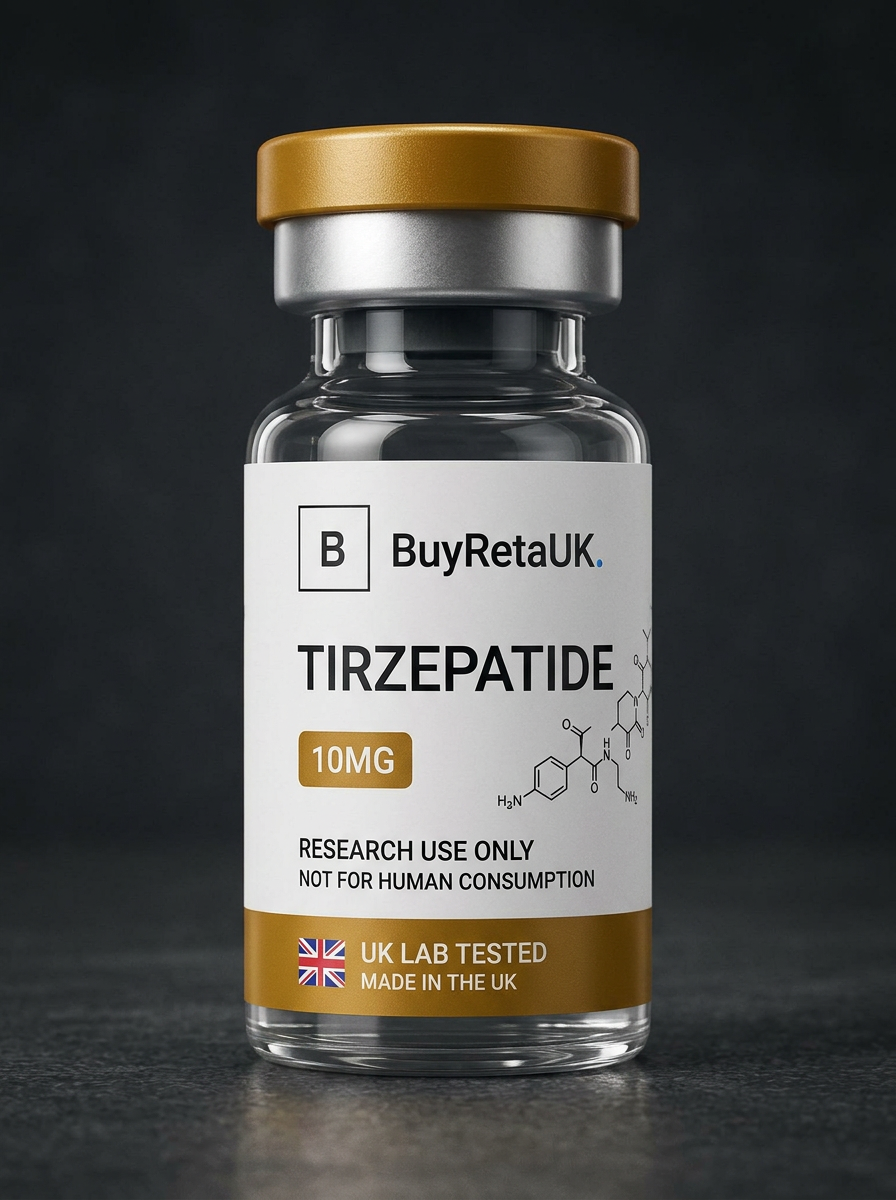
BuyRetaUK Tirzepatide (LY3298176) research peptide vial — evidence reference page
Published
June 2026
Last reviewed
June 2026
Next review
December 2026
Version
v1.1
Reading time
9 min read
Reviewed by
BuyRetaUK Scientific Review Team
Editorial team
BuyRetaUK Editorial Team
Review status
Scientific review complete
Quick summary

Quick summary

Tirzepatide clinical trials are the peer-reviewed Phase 1 – Phase 3 studies of LY3298176, a dual GIP / GLP-1 receptor agonist peptide developed by Eli Lilly. The evidence base is anchored by the SURPASS programme (type-2 diabetes research) and the SURMOUNT programme (obesity research), supported by earlier pharmacokinetic and receptor-pharmacology studies. This page summarises the published literature as an evidence reference; it does not provide medical advice or treatment guidance.

Quick answer

In short.

Tirzepatide clinical trials are the peer-reviewed Phase 1 – Phase 3 studies of LY3298176, a dual GIP / GLP-1 receptor agonist peptide developed by Eli Lilly. The evidence base is anchored by the SURPASS programme (type-2 diabetes research) and the SURMOUNT programme (obesity research), supported by earlier pharmacokinetic and receptor-pharmacology studies. This page summarises the published literature as an evidence reference; it does not provide medical advice or treatment guidance.
Key facts

At a glance.

Research compound
Tirzepatide (LY3298176)
Class
Dual GIP / GLP-1 receptor agonist peptide
First published characterisation
Coskun et al., 2018 (Molecular Metabolism)
Phase 3 in T2D research
SURPASS programme (SURPASS-1 to SURPASS-6)
Phase 3 in obesity research
SURMOUNT programme (SURMOUNT-1 to SURMOUNT-5)
Regulatory clearance (US)
FDA approval — Mounjaro (2022), Zepbound (2023)
Regulatory clearance (EU/UK)
EMA / MHRA authorisations post-2022
Comparators cited
Semaglutide · dulaglutide · insulin glargine · insulin degludec · placebo
Publication venues
NEJM · The Lancet · Molecular Metabolism · JCI Insight
Page scope
Published evidence summary — no medical guidance
Definitions

Key terms.

Clinical trial
A structured research study in human volunteers, designed to evaluate the pharmacology, safety or efficacy of an investigational agent under a pre-specified protocol.
Phase 1
First-in-human studies focused on safety, tolerability and pharmacokinetics in small volunteer cohorts.
Phase 2
Dose-ranging and early efficacy studies in the target research population.
Phase 3
Large, randomised, controlled studies designed to characterise efficacy and safety versus established comparators.
SURPASS
Eli Lilly's Phase 3 clinical trial programme evaluating tirzepatide in type-2 diabetes research populations (SURPASS-1 through SURPASS-6).
SURMOUNT
Eli Lilly's Phase 3 clinical trial programme evaluating tirzepatide in body-weight and obesity research populations (SURMOUNT-1 through SURMOUNT-5).
Randomised controlled trial (RCT)
A study design in which participants are randomly allocated to intervention or comparator arms, minimising selection bias.
Active comparator
An established reference agent — such as semaglutide or insulin glargine — used as the control arm against an investigational compound.
Overview

Overview of the published evidence.

The tirzepatide evidence base has grown from a single 2018 pharmacology paper into one of the most extensively published incretin literatures in modern metabolic science. Foundational receptor pharmacology (Coskun 2018, Willard 2020) established the dual GIP / GLP-1 mechanism; human pharmacokinetics (Urva 2020) supported once-weekly dosing intervals; and the Phase 3 SURPASS and SURMOUNT programmes generated the pivotal randomised controlled data across type-2 diabetes and obesity research populations.

This page summarises that published evidence at the programme level. Receptor-level pharmacology lives on the Tirzepatide mechanism of action page, and the broader laboratory research context sits on Tirzepatide research. This page does not provide medical or treatment guidance.

Development timeline

Publication and development timeline.

2018
Coskun et al. publish the first characterisation of LY3298176 as a dual GIP / GLP-1 agonist (Molecular Metabolism).
2020
Willard et al. describe the imbalanced / biased signalling profile at GLP-1R (JCI Insight); Urva et al. publish the human PK profile (Clin. Pharmacokinetics).
2021
First SURPASS Phase 3 read-outs (SURPASS-1 to SURPASS-4) published in Lancet and NEJM.
2022
SURMOUNT-1 published in NEJM; regulatory approval (Mounjaro) issued in the United States for T2D indication.
2023
SURMOUNT-2 published in the Lancet; obesity indication (Zepbound) approved in the United States.
2024–2025
SURMOUNT-3, SURMOUNT-4 and head-to-head SURMOUNT-5 vs semaglutide add to the obesity evidence base.
SURPASS programme

SURPASS programme overview.

SURPASS is Eli Lilly's Phase 3 clinical trial programme in type-2 diabetes research populations. It is composed of six pivotal randomised trials, each pairing tirzepatide against a different comparator — placebo, semaglutide, insulin degludec, insulin glargine, insulin lispro or add-on to basal insulin — so that the dual GIP / GLP-1 mechanism can be positioned against every relevant class of active reference.

The read-outs are published across The Lancet, NEJM and JAMA and form the primary comparator dataset cited in tirzepatide receptor-pharmacology reviews.

TrialResearch populationComparatorPrimary endpointReference
SURPASS-1Drug-naïve T2D researchPlaceboHbA1c change from baselineRosenstock 2021 (Lancet)
SURPASS-2T2D on metforminSemaglutide 1 mgHbA1c change from baselineFrías 2021 (NEJM)
SURPASS-3T2D on metformin ± SGLT2iInsulin degludecHbA1c change from baselineLudvik 2021 (Lancet)
SURPASS-4T2D with elevated CV riskInsulin glargineHbA1c change from baselineDel Prato 2021 (Lancet)
SURPASS-5T2D on insulin glarginePlacebo (add-on)HbA1c change from baselineDahl 2022 (JAMA)
SURPASS-6T2D on basal insulinInsulin lisproHbA1c change from baselineRosenstock 2023
SURMOUNT programme

SURMOUNT programme overview.

SURMOUNT is the parallel Phase 3 clinical trial programme evaluating tirzepatide in body-weight and obesity research populations. It spans SURMOUNT-1 through SURMOUNT-5 and includes the direct head-to-head SURMOUNT-5 comparison against once-weekly semaglutide 2.4 mg.

For laboratory-supply purposes SURMOUNT is referenced as the pivotal citation set that anchors dual-incretin obesity-research reviews. Receptor-level interpretation of the SURMOUNT read-outs belongs on the mechanism of action page.

TrialResearch populationComparatorPrimary endpointReference
SURMOUNT-1Adults with obesity, without T2DPlacebo% body-weight changeJastreboff 2022 (NEJM)
SURMOUNT-2Adults with obesity and T2DPlacebo% body-weight changeGarvey 2023 (Lancet)
SURMOUNT-3Adults with obesity post lead-inPlacebo% body-weight changeWadden 2023
SURMOUNT-4Weight-maintenance following lead-inPlacebo% body-weight change vs continuationAronne 2024 (JAMA)
SURMOUNT-5Adults with obesity — head-to-headSemaglutide 2.4 mg% body-weight changeAronne 2025 (NEJM)
Scientific themes

Key scientific themes across the trial literature.

  • Dual-incretin pharmacology in humans: the SURPASS and SURMOUNT programmes generated the largest randomised dataset for a dual GIP / GLP-1 agonist to date.
  • Direct GLP-1 comparators: SURPASS-2 and SURMOUNT-5 provide head-to-head data against once-weekly semaglutide — the reference single-agonist incretin.
  • Insulin-comparator arms: SURPASS-3, -4 and -6 position the peptide against long-acting and prandial insulins in T2D research.
  • Dose-titration structure: trials employ a stepwise titration protocol, informing how the compound is typically referenced in laboratory PK modelling.
  • Cross-programme integration: the Coskun 2018 and Willard 2020 receptor papers are cited alongside the Phase 3 read-outs to link mechanism to clinical outcome.
Evidence quality

Evidence quality and interpretation.

From a research-literature perspective, the tirzepatide Phase 3 base scores highly on core internal-validity markers: pre-registered protocols, randomisation, active comparators, and publication in top-quartile peer-reviewed journals. The regulatory-grade dataset generated by SURPASS and SURMOUNT is now integrated into systematic reviews and meta-analyses of the dual-incretin class.

Interpretation for laboratory purposes should remain focused on what the trials characterise — the pharmacology, PK and comparative behaviour of tirzepatide — rather than on downstream clinical decisions, which sit outside the scope of this reference.
Limitations

Research limitations of the current evidence base.

  • Follow-up duration in many pivotal trials is relatively short compared with older incretin therapies.
  • The bulk of the Phase 3 dataset is generated by a single sponsor programme.
  • Head-to-head comparisons with the triple agonist retatrutide are not yet published; cross-programme comparisons remain indirect.
  • Long-term cardiovascular outcome trials for tirzepatide are still maturing at the time of writing.
  • Real-world evidence datasets are still relatively young compared with those for semaglutide.
Laboratory relevance

Laboratory relevance of the trial literature.

Within an in-vitro laboratory context, the SURPASS and SURMOUNT programmes provide the citation framework that justifies tirzepatide's role as a reference dual-agonist comparator. Typical uses of the trial literature in laboratory workflows include:

  • Framing the compound in receptor-pharmacology reviews and grant applications.
  • Sourcing published PK parameters when designing stability or degradation assays.
  • Citing head-to-head SURPASS-2 / SURMOUNT-5 read-outs when tirzepatide is used alongside semaglutide as a comparator peptide.
  • Establishing dose-titration rationale for cross-species preclinical model design.

Every research-grade tirzepatide batch is released against the peptide-specific quality attributes summarised on laboratory quality and documented by a batch-specific COA — see the Certificate of Analysis guide and the verification library.

Laboratory quality

Quality standards.

Frequently asked questions

FAQs.

What are the tirzepatide clinical trials?[+]

The tirzepatide clinical trials are the Phase 1 – Phase 3 studies of LY3298176 published in the peer-reviewed literature. The Phase 3 programme is organised into two pillars: SURPASS in type-2 diabetes research populations and SURMOUNT in obesity research populations, supported by earlier pharmacokinetic and pharmacology publications.

What is the SURPASS programme?[+]

SURPASS is Eli Lilly's Phase 3 clinical trial programme in type-2 diabetes research. It spans SURPASS-1 to SURPASS-6, each evaluating tirzepatide against a different active comparator or background regimen — including placebo, semaglutide, insulin degludec and insulin glargine.

What is the SURMOUNT programme?[+]

SURMOUNT is Eli Lilly's Phase 3 clinical trial programme in obesity research populations. It spans SURMOUNT-1 to SURMOUNT-5 and characterises tirzepatide across different body-weight research cohorts and dose steps.

Where are the tirzepatide trial results published?[+]

The primary Phase 3 read-outs have been published in high-impact peer-reviewed journals including the New England Journal of Medicine and The Lancet, with pharmacology and PK papers in Molecular Metabolism, JCI Insight and Clinical Pharmacokinetics.

Do the trials mean tirzepatide is approved for human use in the UK?[+]

Tirzepatide has received regulatory authorisations in various jurisdictions under its branded forms. BuyRetaUK supplies research-grade tirzepatide strictly for in-vitro laboratory investigation. This page summarises published evidence and does not provide medical or prescribing guidance.

How do the tirzepatide trials compare with semaglutide trials?[+]

The SURPASS-2 study directly compared tirzepatide with once-weekly semaglutide in a type-2 diabetes research population. Beyond that, comparisons between the SURPASS/SURMOUNT and STEP programmes are drawn indirectly at the literature level rather than head-to-head.

What are the main limitations of the tirzepatide evidence base?[+]

Key limitations include the relatively short follow-up of many pivotal studies, the concentration of trials within one sponsor's programme, and limited long-term outcome data compared with older incretin therapies. The evidence base continues to expand.

Does this page provide medical or treatment advice?[+]

No. This page is an educational summary of published scientific evidence for laboratory-research context. It is not medical guidance and does not discuss patient decision-making.

References

Scientific sources & further reading.

  1. [1]Coskun T. et al. (2018) LY3298176, a novel dual GIP and GLP-1 receptor agonist for the treatment of type 2 diabetes mellitus. Molecular Metabolism, 18 DOI: 10.1016/j.molmet.2018.09.009DOI →
  2. [2]Willard F.S. et al. (2020) Tirzepatide is an imbalanced and biased dual GIP and GLP-1 receptor agonist. JCI Insight, 5(17) DOI: 10.1172/jci.insight.140532DOI →
  3. [3]Urva S. et al. (2020) The novel dual GIP and GLP-1 receptor agonist tirzepatide transiently delays gastric emptying similarly to selective long-acting GLP-1 receptor agonists. Clinical Pharmacokinetics, 59
  4. [4]Rosenstock J. et al. (2021) Efficacy and safety of a novel dual GIP and GLP-1 receptor agonist tirzepatide in patients with type 2 diabetes (SURPASS-1): a double-blind, randomised, phase 3 trial. The Lancet, 398(10295) DOI: 10.1016/S0140-6736(21)01324-6DOI →
  5. [5]Frías J.P. et al. (2021) Tirzepatide versus semaglutide once weekly in patients with type 2 diabetes (SURPASS-2). New England Journal of Medicine, 385(6) DOI: 10.1056/NEJMoa2107519DOI →
  6. [6]Ludvik B. et al. (2021) Once-weekly tirzepatide versus once-daily insulin degludec as add-on to metformin with or without SGLT2 inhibitors in patients with type 2 diabetes (SURPASS-3): a randomised, open-label, parallel-group, phase 3 trial. The Lancet, 398(10300) DOI: 10.1016/S0140-6736(21)01443-4DOI →
  7. [7]Del Prato S. et al. (2021) Tirzepatide versus insulin glargine in type 2 diabetes and increased cardiovascular risk (SURPASS-4): a randomised, open-label, parallel-group, multicentre, phase 3 trial. The Lancet, 398(10313) DOI: 10.1016/S0140-6736(21)02188-7DOI →
  8. [8]Dahl D. et al. (2022) Effect of subcutaneous tirzepatide vs placebo added to titrated insulin glargine on glycemic control in patients with type 2 diabetes (SURPASS-5). JAMA, 327(6) DOI: 10.1001/jama.2022.0078DOI →
  9. [9]Jastreboff A.M. et al. (2022) Tirzepatide once weekly for the treatment of obesity (SURMOUNT-1). New England Journal of Medicine, 387(3) DOI: 10.1056/NEJMoa2206038DOI →
  10. [10]Garvey W.T. et al. (2023) Tirzepatide once weekly for the treatment of obesity in people with type 2 diabetes (SURMOUNT-2). The Lancet, 402(10402) DOI: 10.1016/S0140-6736(23)01200-XDOI →
  11. [11]United States Pharmacopeia (2023) General Chapter <1503> Quality Attributes of Synthetic Peptide Drug Substances. USP-NF

Peer-reviewed citations are added as each article is expanded. See our editorial standards for our sourcing and accuracy commitments.

Editorial team
BuyRetaUK Editorial Team
Author · BuyRetaUK

The BuyRetaUK editorial team publishes laboratory-focused reference content on research peptides, analytical methods and Certificates of Analysis. All articles are written for in-vitro research contexts only.

View profile →
Scientific reviewer
BuyRetaUK Scientific Review Team
Scientific reviewer

Every editorial article is reviewed against our accuracy commitment and quality-assurance checklist before publication. Named reviewer profiles are added as our reviewer network expands.

View profile →
Editorial standards

How this content is produced.

Every article follows a documented editorial process — sourcing, scientific review, update cadence and correction policy — so researchers can rely on what we publish.

Read the full editorial standards →
Commercial journey

Your research-to-checkout journey.

Educational first. Each step is optional — start wherever you are in your research.

  1. Step 1ResearchUnderstand mechanism, class and study context.
  2. Step 2ComparisonSee how compounds differ in receptor profile.
  3. Step 3Laboratory qualityHPLC-UV purity, mass-spec identity, endotoxin data.
  4. Step 4Certificates of analysisVerify your batch in the public COA library.
  5. Step 5ProductsChoose a strength — every vial ships with COA.
  6. Step 6CheckoutEncrypted checkout, temperature-controlled UK dispatch.
Recommended reading path

How to research this topic.

Recommended reading path

  1. Step 01
    Start here — What is Tirzepatide?

    Dual GIP/GLP-1 receptor overview and research framing.

  2. Step 02
    Mechanism of action

    How dual receptor engagement drives the incretin response.

  3. Step 03
    Research landscape

    Published evidence base, SURPASS & SURMOUNT programmes, laboratory applications.

  4. Step 04
    Clinical trial evidence

    Phase 3 SURPASS & SURMOUNT read-outs and the peer-reviewed literature.

  5. Step 05
    Compare with Retatrutide

    Dual vs triple incretin agonist — how they differ.

  6. Step 06
    Verify a batch

    HPLC purity and Certificate of Analysis verification.

  7. Step 07
    Storage & reconstitution

    Lyophilised storage, bacteriostatic water reconstitution, in-use stability.

  8. Step 08
    Browse strengths

    Every tirzepatide vial strength available.

  9. Step 09
    Buy tirzepatide

    UK commercial hub — lab data, COAs and dispatch.

Topic overview

Tirzepatide at a glance.

Topic overview

Comparisons
Knowledge Hub
Collections
Shop
Common pairings

Frequently researched together.

Batch verification

Every batch of Tirzepatide ships with a third-party HPLC and mass-spec Certificate of Analysis. Browse the live COA library to verify your lot.

Research tools
FAQ
Which is the newer research compound?

Retatrutide is the more recently characterised compound in the academic literature, while tirzepatide is the more established reference.

Read: Retatrutide vs Tirzepatide
Is HPLC the only purity test that matters?

HPLC is the primary purity metric, but identity (mass spec) and endotoxin testing are also important components of a complete COA.

Read: Understanding HPLC Testing
Are batches tested in-house?

Identity and purity are confirmed by independent third-party laboratories — not by us — so the result is impartial.

Read: Laboratory Quality Standards
Is retatrutide approved for human use?

No. Retatrutide is supplied strictly for laboratory research and is not approved for human or veterinary administration.

Read: What is Retatrutide?
Next steps

Continue your research.